
Last updated November 15, 2026
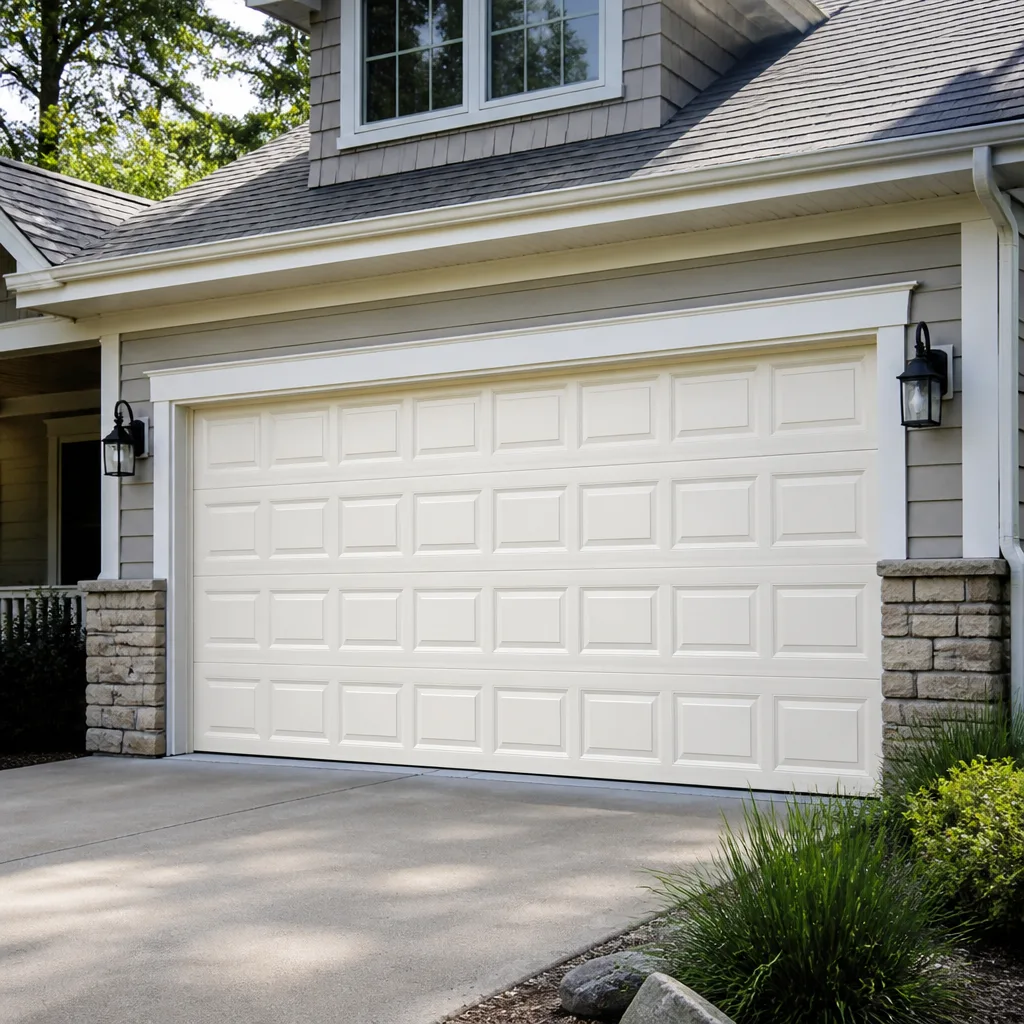 Raised-panel steel
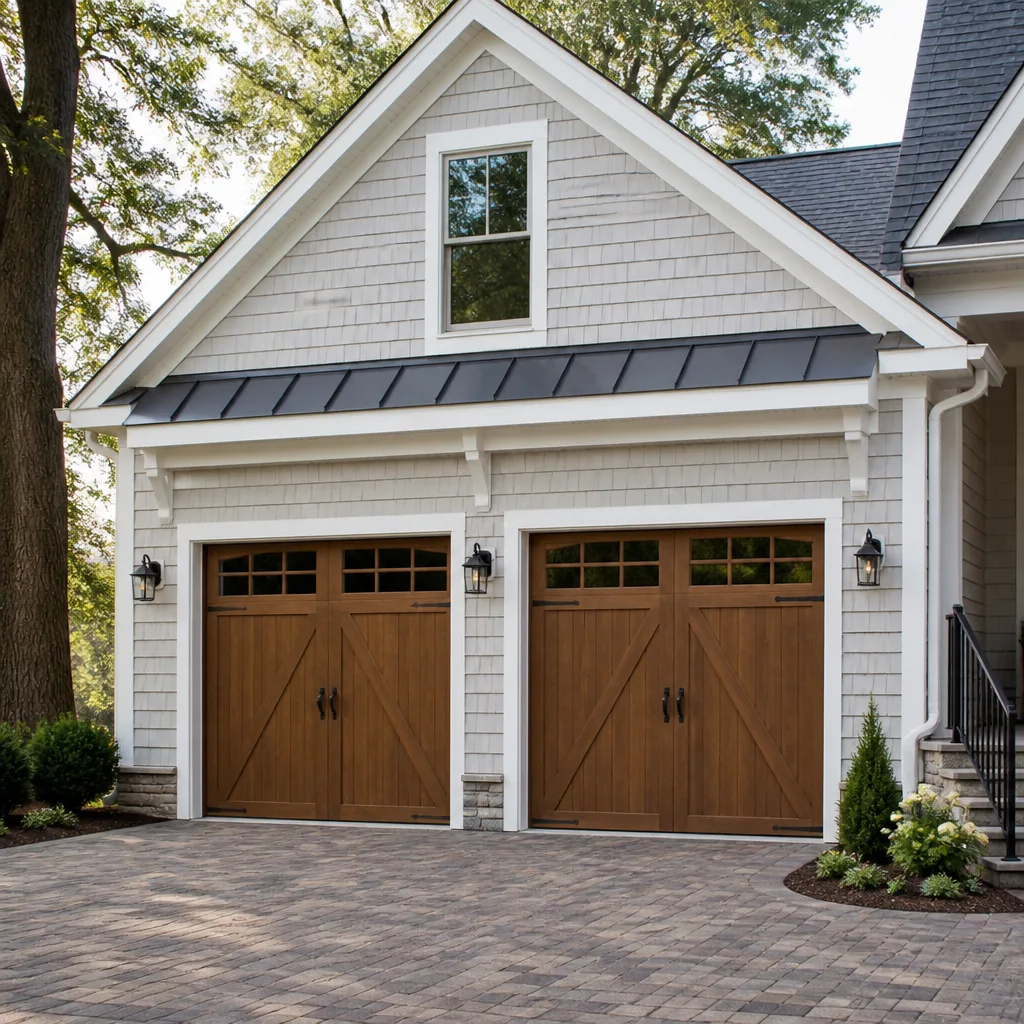 Carriage house
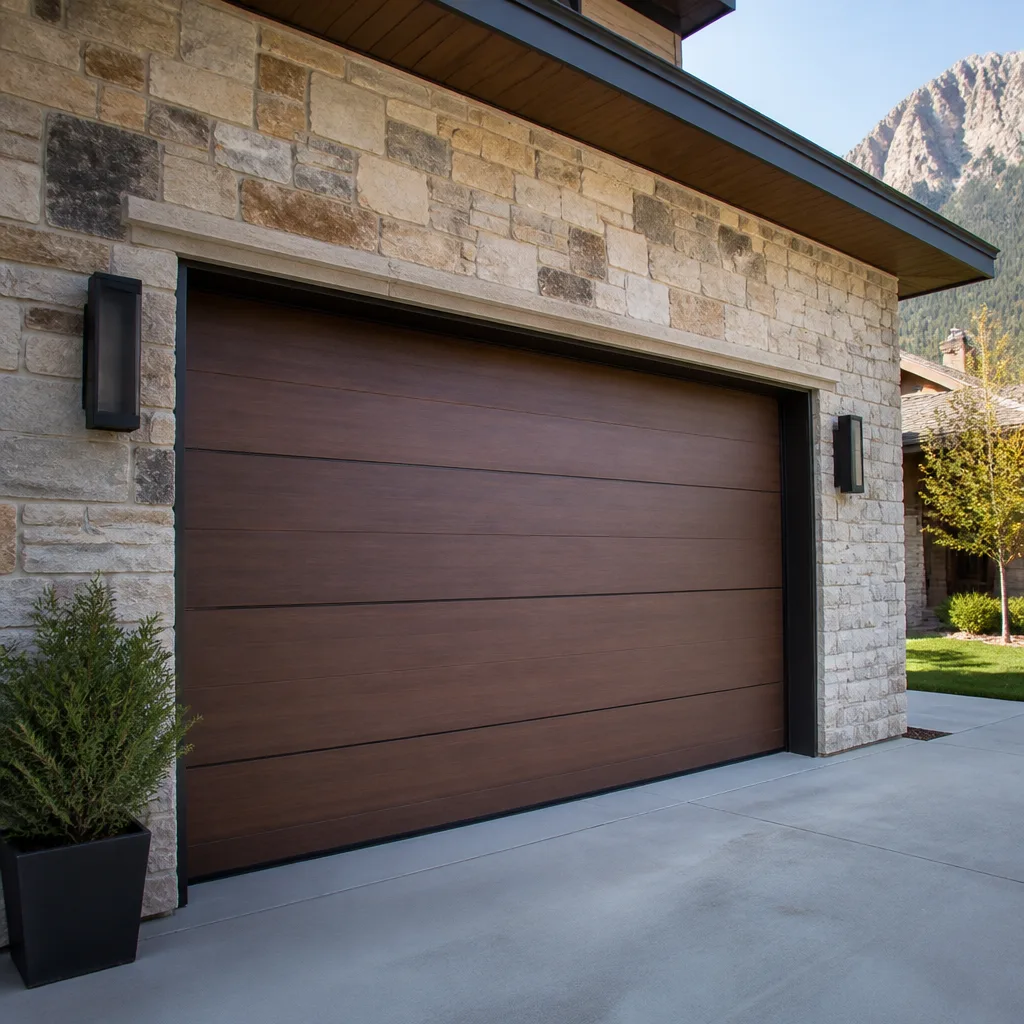 Modern flush
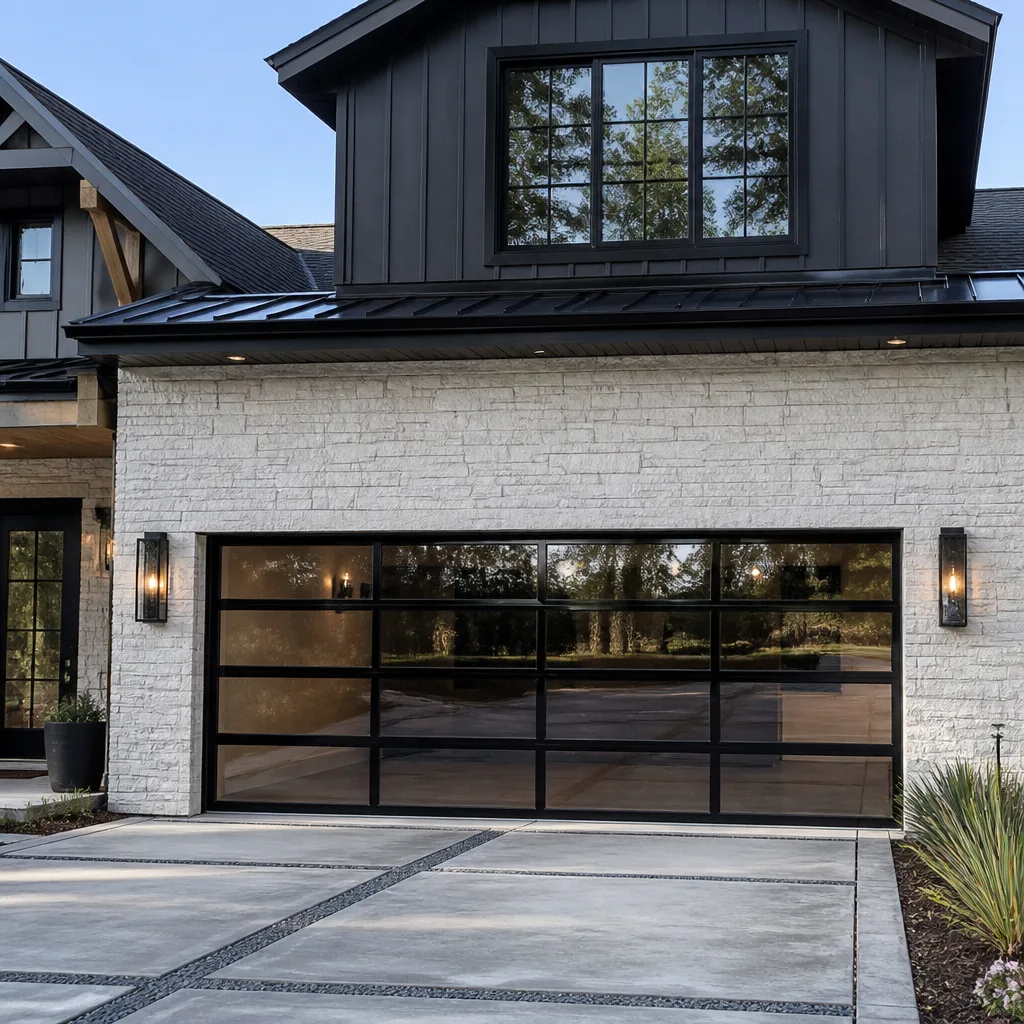 Full-view glass
 LiftMaster openers
 Chamberlain openers
Full 25-point door and opener safety check with every visit - springs, cables, rollers, tracks, and your LiftMaster or Chamberlain opener included
You get a price before we start. It does not change when the pro arrives.
Get your free estimateGarage Door Repair Troubleshooting in Detroit: Common Problems and How to Fix Them
Most garage door problems get misdiagnosed in the first thirty seconds. A homeowner hears a grinding noise and assumes the opener is dying, so they price a new motor. In reality the grinding is often dry metal on metal, and a can of lubricant fixes it. The noise was never the problem. It was the signal. That distinction – reading your door as a whole system instead of chasing the loudest symptom – is what this guide is about. We’ll map the sounds, movements and failures you’re seeing to the actual component responsible, then show you which repairs are safe to do yourself and which ones need a technician. Detroit’s freeze-thaw swings and road salt add their own wrinkles, so we’ll fold those in too.
Quick Answer
To troubleshoot a garage door in Detroit, start by separating mechanical faults from electrical ones: if the door is hard to lift by hand or comes down too fast, the problem is springs, cables or tracks, not the opener. If the door is smooth by hand but the motor strains, reverses or won’t respond, the issue is electrical – sensors, wiring or the opener’s logic board. Most Detroit door failures trace back to spring fatigue, misaligned tracks from freeze-thaw movement, or opener sensor trouble, and a trained technician can identify which with a single inspection.
Styles & brands we work with
- Raised-panel steel
- Carriage house
- Modern flush
- Full-view glass
- LiftMaster openers
- Chamberlain openers
Table of Contents
- How Garage Doors Actually Fail
- Mechanical or Electrical: How to Tell Before You Call
- The Symptom-to-Source Diagnostic Chart
- Detroit Factors That Accelerate Garage Door Failure
- The 3 Repairs You Can Do Yourself and the 4 You Can’t
- What a Correct Diagnosis Looks Like on Paper
- Common Mistakes to Avoid
- When to Call a Professional
How Garage Doors Actually Fail
A garage door is a balanced system, not a collection of parts. The springs carry the door’s weight, the cables transfer that load, the tracks steer the panels, and the opener does almost none of the lifting – it mostly just starts and stops a door that the springs have already balanced. That’s why replacing an opener rarely fixes a door that won’t lift. The motor was never doing the heavy work.
When we assess a door, we look at four subsystems in order:
- Torsion or extension springs – the counterweight. When these lose tension, everything downstream struggles, including the opener.
- Cables and drums – the transfer mechanism. A frayed cable is a failure waiting to happen and often shows up as a door that hangs crooked.
- Tracks and rollers – the guide. Bent tracks or worn nylon rollers cause binding, noise and uneven travel.
- Opener and safety system – the control layer. Sensors, logic boards, remotes and the safety reverse mechanism live here.
In our experience, the opener gets blamed for spring, cable and track problems constantly. A homeowner in Detroit with a heavy wood door and a tired spring may decide the LiftMaster on the ceiling has died, when the motor is fine and simply can’t compensate for lost spring tension. Diagnosing in the wrong order costs money.
Mechanical or Electrical: How to Tell Before You Call
This is the single most useful test a homeowner can run, and it takes about five minutes. The goal is to isolate the door from the opener and see how the door behaves on its own.
First, pull the manual release cord to disconnect the door from the opener. With the door disconnected, raise and lower it by hand. This is your diagnostic moment:
- If the door is heavy, won’t stay up, or slams down fast, you have a mechanical problem – almost always spring tension. Stop here and don’t force it.
- If the door binds or scrapes in one spot, look at the tracks and rollers. A freeze-thaw season in Detroit can push a track out of alignment enough to cause consistent binding at the same point in travel.
- If the door moves smoothly by hand but the opener strains, reverses or hums without moving, the fault is electrical – the opener’s capacitors, logic board or wiring.
- If the door won’t close and the opener’s light flashes, check the safety sensors near the floor first. The most common cause is a misaligned photo-eye or something blocking the beam.
One safety note before you start: never attempt to adjust, remove or replace springs or the cables attached to them. Those cables are under extreme tension, and a sudden release can cause serious injury. That’s a job for a trained technician with the right tools and the right knowledge of the specific door. Our garage door repair team can assess spring and cable problems the same day.
The Symptom-to-Source Diagnostic Chart
This framework maps what you’re hearing and seeing to the component most likely responsible. Read down the left column, then cross-check the right.
- Loud bang, door stops moving, opener runs but door doesn’t lift – broken torsion spring. Often the single loudest diagnostic event in the trade. Stop operating the door and call.
- Grinding or squealing that gets worse over weeks – dry hinges, rollers or spring coils. Lubrication on the door’s hinges and rollers (not the spring) helps; if the noise persists, the rollers may be worn.
- Door hangs crooked or gaps at one corner – a stretched or frayed cable on one side, or one broken extension spring on a two-spring system.
- Door reverses before hitting the floor – safety sensor obstruction or misalignment, or a limit switch set wrong on the opener.
- Door won’t respond to the remote but the wall button works – remote battery, remote programming, or a radio interference issue with the opener’s receiver. This applies to Chamberlain and LiftMaster units too.
- Opener runs briefly then clicks off, light flickers – opener capacitor, gear assembly or a logic board fault. Electrical, not mechanical.
- Door shakes or rattles through travel – loose hardware, worn rollers, or a track that’s out of level.
- Door stops a foot off the floor and reverses – travel limit misadjustment or a down-force setting that needs resetting.
The pattern here matters. A problem that appears suddenly and dramatically is usually a spring or cable. A problem that develops slowly – grinding, rattling, worsening noise – is usually a wear item like rollers, hinges or lubricated joints depending on the model. Reading the timeline is half the diagnosis.
Detroit Factors That Accelerate Garage Door Failure
Detroit’s weather works on a garage door in ways that don’t show up in a manufacturer’s manual. The freeze-thaw cycle is the big one. Water runs into the door’s track and hinge channels during a mild afternoon, freezes overnight, expands, and pushes tiny gaps wider. Repeat that dozens of times across a winter and tracks drift out of plumb. Doors that were perfectly aligned in October start binding in January.
Road salt is another factor most homeowners overlook. Cars pull into the garage dripping saltwater, and it settles along the bottom of the door – the bottom seal, the bottom bracket and the lowest hinges. Over a season or two, that salt attacks the metal finish and accelerates corrosion on the bottom section of the door. Bottom sections and bottom seals take the brunt of it. Snow-melt runoff that collects around a threshold can also rust a low bracket until it no longer holds.
Humidity swings matter too, especially for wood doors. Detroit’s wet spring and dry winter air cause wood panels to swell and shrink. A wood door that fit snug in April can develop panel gaps or binding edges by January. If you have a wood door, expect an alignment check each season change.
On the opener side, temperature affects the safety reverse system. A door that reversed early in a cold snap may have just been stiff from the cold rather than faulty. If the behavior clears once the weather warms, the door may simply need its down-force adjusted – or the mechanical cause corrected so the opener isn’t compensating for a stiff door.
None of this means you should replace the door. It means a Detroit garage door needs the same check a car does as the seasons turn. Our Detroit guide covers the parts of a system that take the worst of it locally. If you’re hearing grinding, rattling or a door that just doesn’t travel smoothly in cold weather, that’s the signal to get it looked at rather than waiting for a breakdown.
The 3 Repairs You Can Do Yourself and the 4 You Can’t
Not every problem needs a technician, and forcing every issue into a service call erodes trust. Here’s an honest split.
Safe to do yourself:
- Lubricate hinges, rollers and tracks. A dry hinge squeals. A quick application of proper garage door lubricant (not WD-40, which attracts dust) along the hinge pivots and roller stems quiets most grinding. This alone prevents a lot of premature wear.
- Align and clean safety sensors. Wipe the photo-eye lenses, check that both sensor lights are lit, and nudge them back toward each other if a bumped sensor has wandered. Most “door won’t close” calls are this.
- Replace remote batteries and reprogram remotes. Swap the battery first, then reprogram to the opener. On LiftMaster and Chamberlain units, the learn button makes this straightforward. If the wall button works and the remote doesn’t, this is almost always the cause.
Leave these to a technician:
- Spring replacement or adjustment. Torsion and extension springs store enormous energy. A snapped spring or a sudden cable release during a DIY attempt can cause serious injury.
- Cable repair. Cables are under spring tension and can cut through a hand if they slip. Adjusting them incorrectly unbalances the door.
- Track realignment. A track is a guide for a heavy moving object. Bending it back wrong can cause the door to jump the track and come down unevenly.
- Opener logic, gear or capacitor repair. The opener’s internals involve mains wiring and stored charge. Diagnosing a failed capacitor or gear assembly requires a trained eye and the right safety protocol.
The dividing line is tension and electricity. If the repair involves the springs, the cables under spring tension, or the opener’s internal electronics, call a technician. Everything else on the list is within reach of a careful homeowner with a stepladder and a screwdriver.
What a Correct Diagnosis Looks Like on Paper
A diagnostic visit should produce a written picture of the door – not a verbal guess and a handshake quote. When a technician correctly diagnoses your door, the report should tell you what failed, what’s worn but still working, and what’s likely next. Here’s what to expect so you can judge a quote by what’s in it, not just the number on the bottom.
- The specific component and its condition – “right torsion spring fractured, left showing fatigue” rather than “springs bad.”
- The root cause, not just the symptom – for example, noting that a bent track caused roller wear, so the fix addresses both.
- A list of related items under stress – rollers, hinges, the bottom seal and cables that weren’t the main failure but will fail soon. This is where the difference between fixing a problem and patching it lives.
- The repair-or-replace recommendation with reasoning. An honest inspector will tell you when a door is worth repairing and when it isn’t, and why. A tech with brand fluency across Clopay and Wayne Dalton panels will explain whether a replacement section or full door makes more sense for your situation.
- A written price, agreed before work starts. The number should be clear, itemized where possible, and settled with you before a tool comes off the truck.
- No pressure to brand-switch. A real diagnostic gives you options that fit your existing equipment. If a technician insists your opener brand is the problem and pushes a replacement, get a second opinion.
For a full-system assessment of the opener itself – sensors, logic board, travel limits, remote programming – our garage door opener repair specialists work on LiftMaster, Chamberlain, Genie and other systems already in the home. A proper diagnosis shouldn’t be a mystery.
Common Mistakes to Avoid
- Assuming the opener is the problem. Most “dead opener” symptoms are really heavy doors with failing springs. You’ll spend money replacing a motor that was never faulty; disconnect the door and lift it by hand first.
- Lubricating the torsion spring. Some homeowners soak the spring to stop a squeak, but the spring’s energy needs respect, not a spray can. Lubricate hinges, rollers and track pivots instead.
- Ignoring a grinding noise for weeks. A dry hinge that grinds today becomes a worn roller tomorrow and a misaligned track after that. Early attention to small noises is cheaper than the chain reaction that follows.
- Setting the opener’s down-force to compensate for a stiff door. Cranking up the down-force masks the real problem and forces the opener and door to fight each other. Detroit’s cold snaps make the stiffening worse; fix the door, not the setting.
- Skipping a bottom-seal check in winter. Road salt eats the bottom seal and bracket first. A quick look at the bottom seal each season catches corrosion before it reaches the bottom section.
- Taking the lowest verbal quote. A price with no written breakdown of what’s being fixed is a price you can’t compare. Insist on a written estimate that names the components.
- Rebuilding a door that should be replaced – or replacing a door that just needs a spring. Detect the difference with a proper inspection. Repair-vs-replace is a decision that needs facts, not a guess from the curb.
When to Call a Professional
Call a technician the moment you have a loud bang with a door that won’t lift, a door that comes down too fast, or a visible broken spring. Those are the cases where waiting can make the problem worse and operating the door can be dangerous. Call if the door hangs crooked, if a cable looks frayed or slack, or if your opener reverses, hums without moving or clicks off repeatedly. Those are all signals to stop forcing the door and get a proper diagnosis.
And call early if you’re not sure what you’re hearing. A brief inspection that identifies a worn roller before it takes out a track is far cheaper than a full track replacement. Vantage Garage Door Repair offers free estimates in Detroit – call (888) 804-9214. We answer 24/7. Fast dispatch from 7am to 7pm, Sunday through Friday. The price is quoted and agreed before any work starts, and our technicians have up to 14 years of experience with the doors and openers already in your home.
See the difference
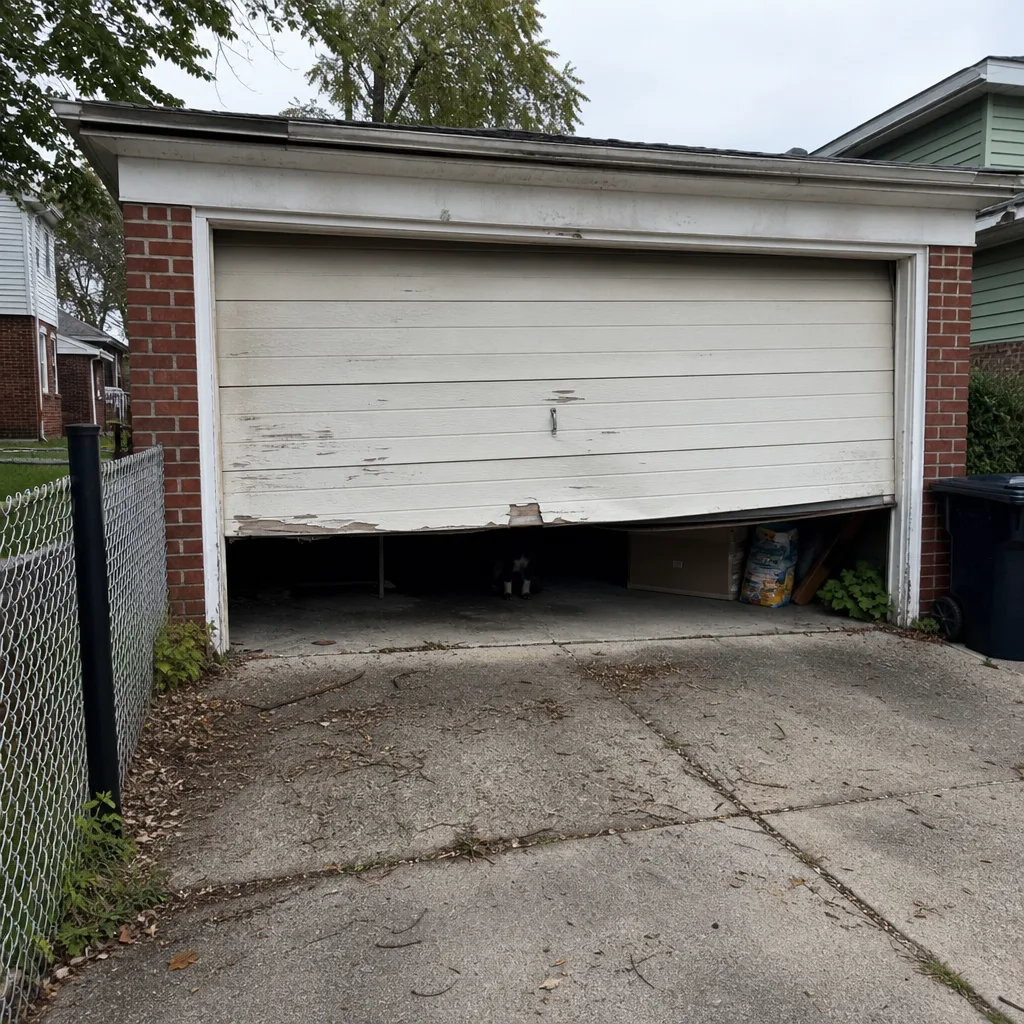 Before
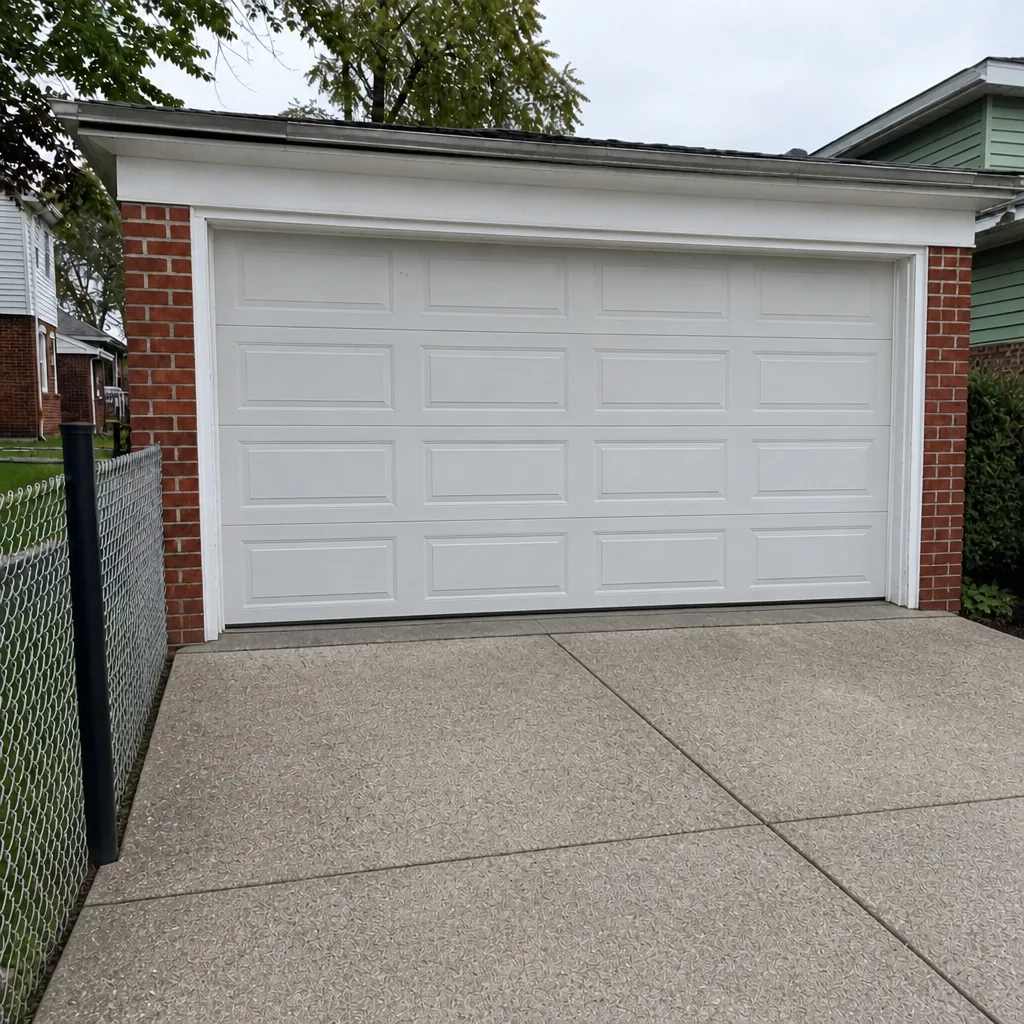 After
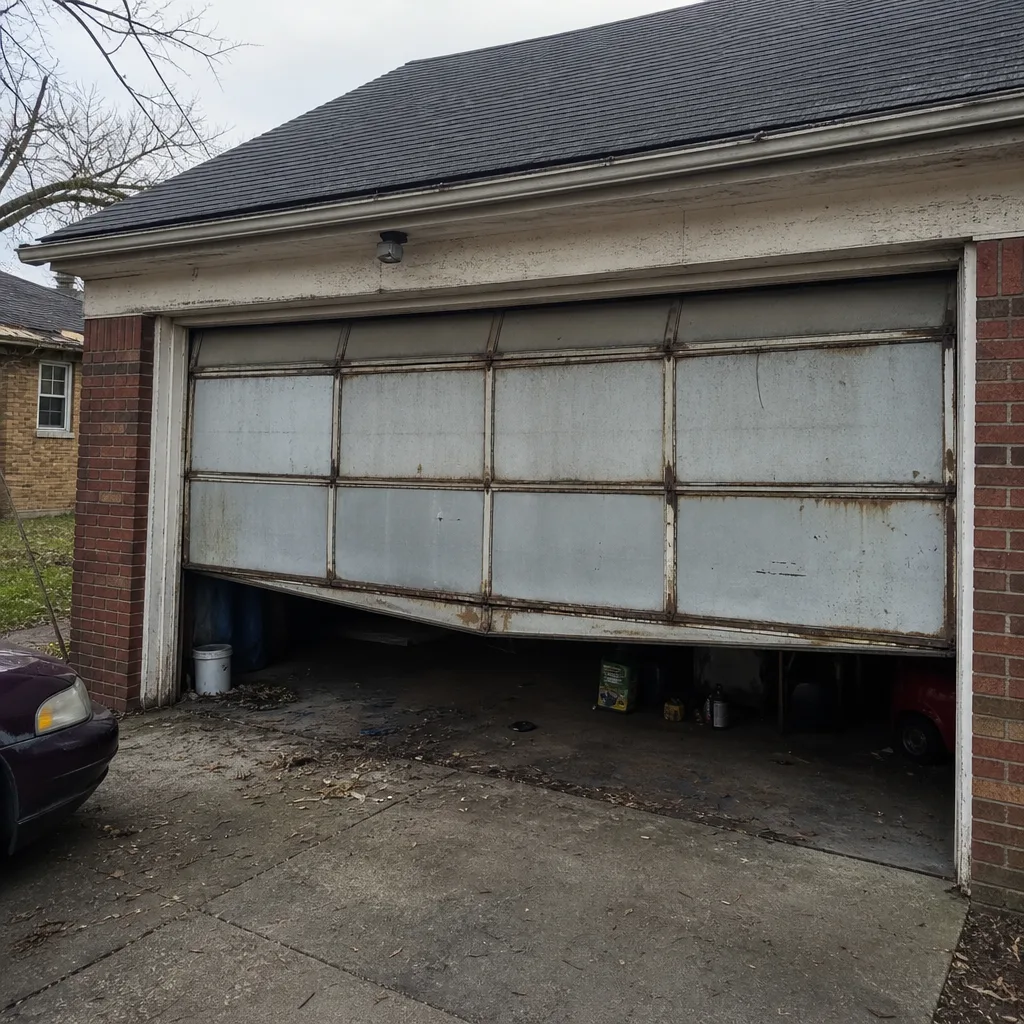 Before
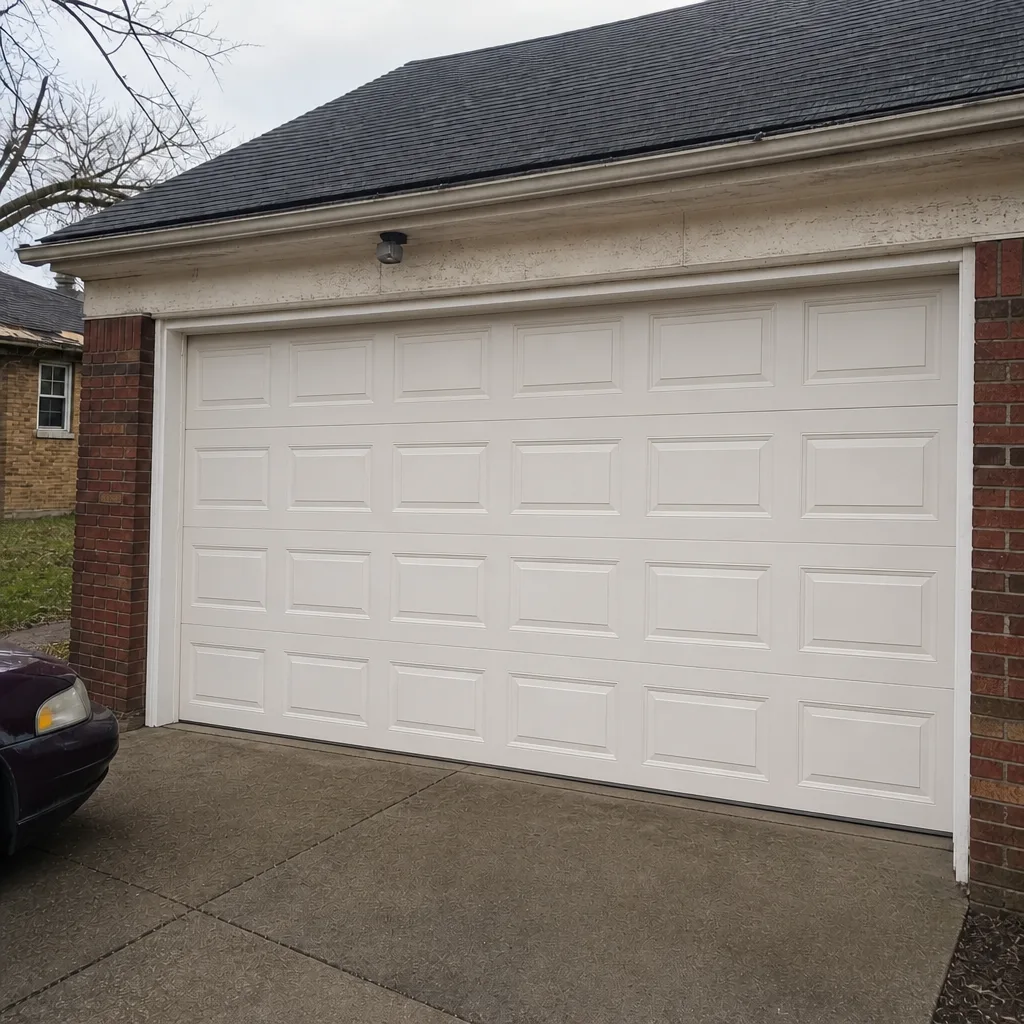 After
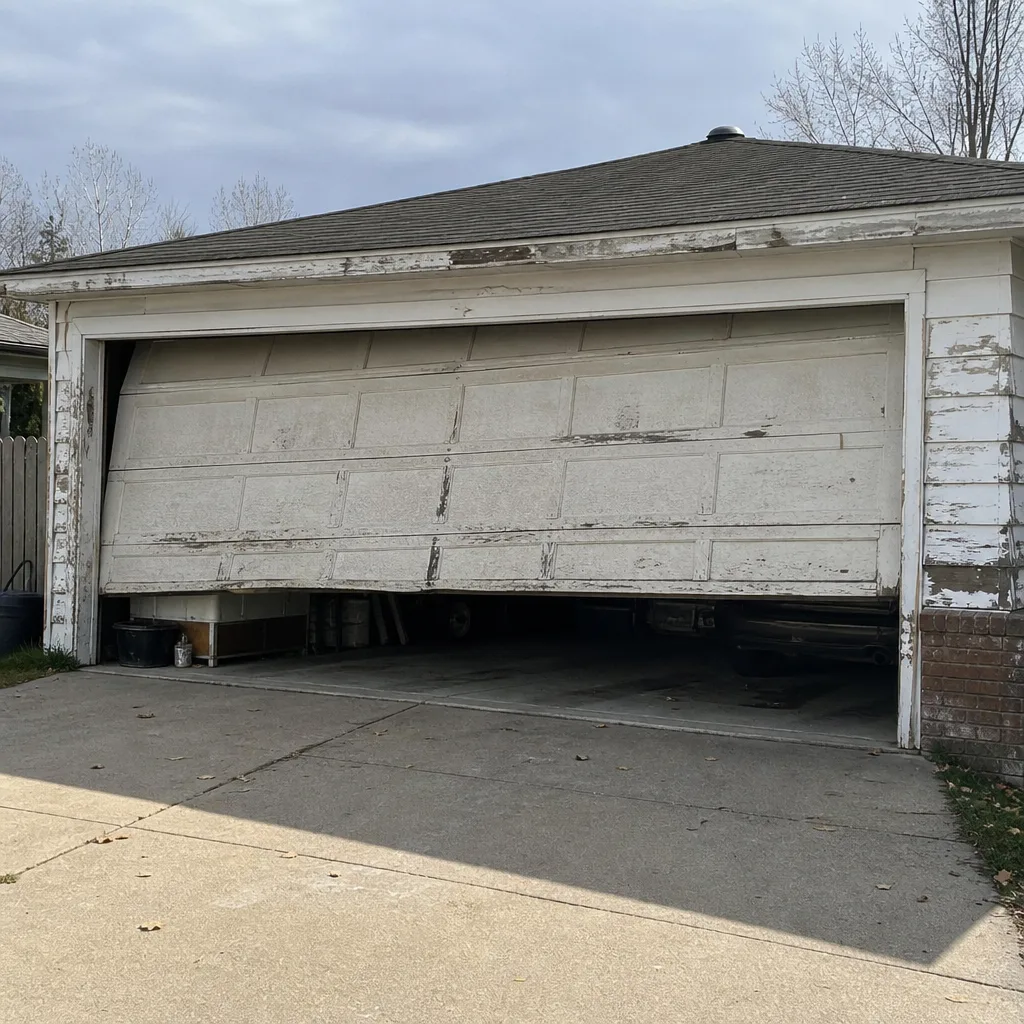 Before
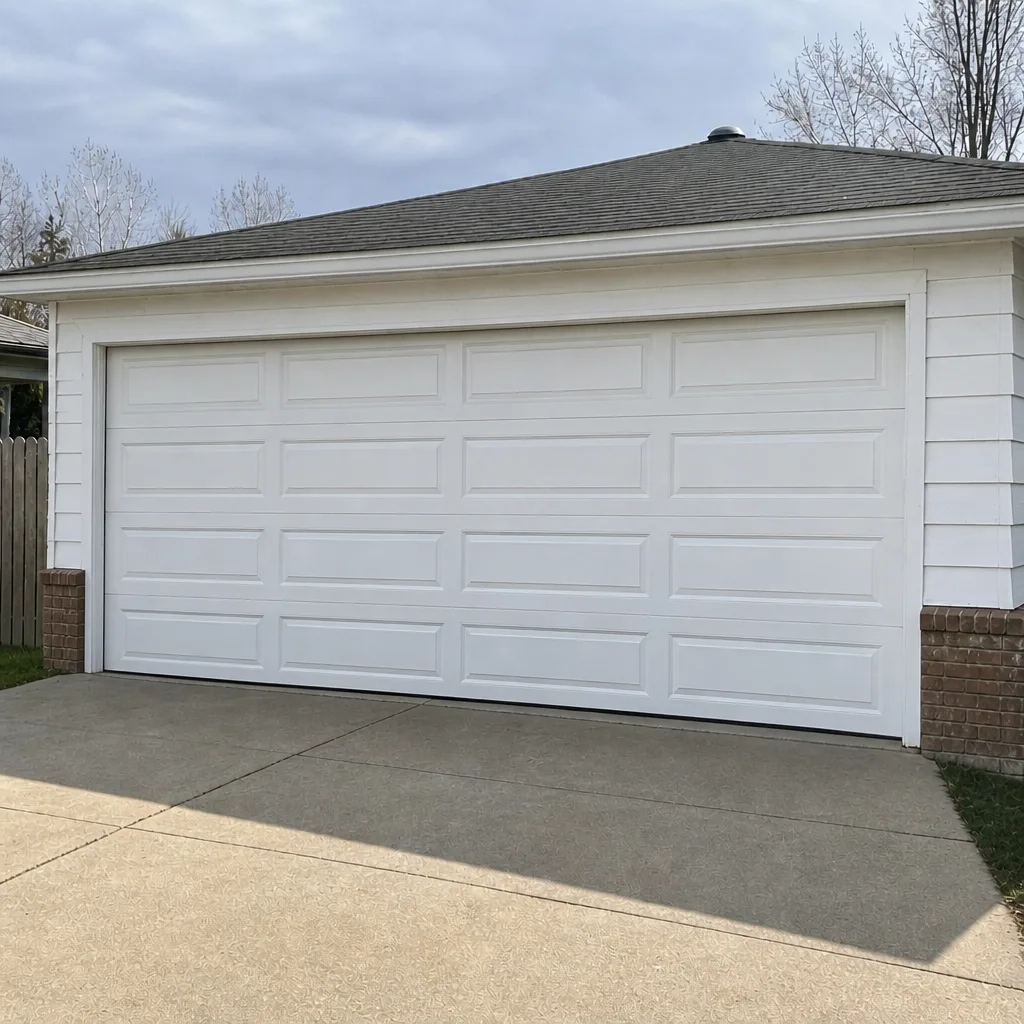 After
Frequently Asked Questions
Garage door spring repair in Detroit typically runs in the low hundreds depending on the type and number of springs. Spring repair is one of the less expensive repairs on a door when caught early; the larger cost is usually the cascade of secondary damage that happens when a broken spring is ignored too long. Because a broken spring often brings a worn roller, a bent track or a strained opener with it, a proper inspection matters. Call (888) 804-9214 for an exact quote – estimates are free.
Yes, same-day repair is available for stuck, damaged or malfunctioning doors across Detroit. We answer 24/7, and fast dispatch from 7am to 7pm means most callers get a technician the same day they call. The write-up: tell us the symptom, and we’ll get the right tools and parts ready before we arrive. Call (888) 804-9214 to set it up.
Disconnect the door from the opener using the manual release cord and lift the door by hand. If it’s heavy, binds or slams down, the problem is mechanical – springs, cables or tracks – and the opener merely lacked the power to compensate. If the door moves smoothly but the opener won’t respond or reverses, the fault is electrical and lives in the sensors, wiring or opener internals. Call (888) 804-9214 for an exact quote – estimates are free.
Winter in Detroit brings freeze-thaw cycles that move tracks out of alignment and stiffen hinges, plus saltwater runoff from cars that corrodes the bottom seal and bracket. A door that worked all fall can bind in January for no apparent reason. That’s usually mechanical – a stiff door or a track that has drifted – not a failed opener. A seasonal inspection catches it early. Call (888) 804-9214 for a diagnosis.
No – the written estimate quotes and agrees the price before any work starts, so what’s written down is what you pay. If the technician finds a related issue mid-repair, you decide whether to proceed and how the price adjusts before any work continues. That protects your budget and lets you make the decision with the facts in front of you. Call (888) 804-9214 to schedule a free estimate.
Yes, our technicians are licensed and insured. They also work across the eight major garage door and opener brands – LiftMaster, Chamberlain, Genie, Clopay, Amarr, Wayne Dalton, Craftsman and Raynor – so they can confidently diagnose the system you already have without pushing a brand switch. If a repair makes more sense than a replacement, that’s what you’ll hear. Call (888) 804-9214 with any questions – estimates are free.
The Bottom Line
Troubleshooting a garage door in Detroit is mostly about reading the symptom correctly and not misattributing the cause. Do the disconnect-and-lift test to separate mechanical from electrical. Read the symptom-to-source chart to match the failure to the component. Lubricate hinges and rollers, align the sensors and change remote batteries yourself. Leave springs, cables, tracks and opener internals to a technician. And when you do call for help, insist on a written diagnosis that names the components and a price agreed before work starts. Follow those three habits and you’ll fix the right part the first time.
If your door needs a look, call (888) 804-9214 for a free estimate. We answer 24/7. Fast dispatch from 7am to 7pm, Sunday through Friday. Whether it’s a LiftMaster opener acting up, a Genie remote that won’t pair, or a door that’s simply worn out after a Detroit winter, a proper diagnosis is the fastest way back to a door that works. Reach out to Vantage Garage Door Repair or our Detroit garage door repair team and get a straight answer on what’s wrong and what it takes to fix it.
Written by the team at Vantage Garage Door Repair.