
Last updated November 15, 2026
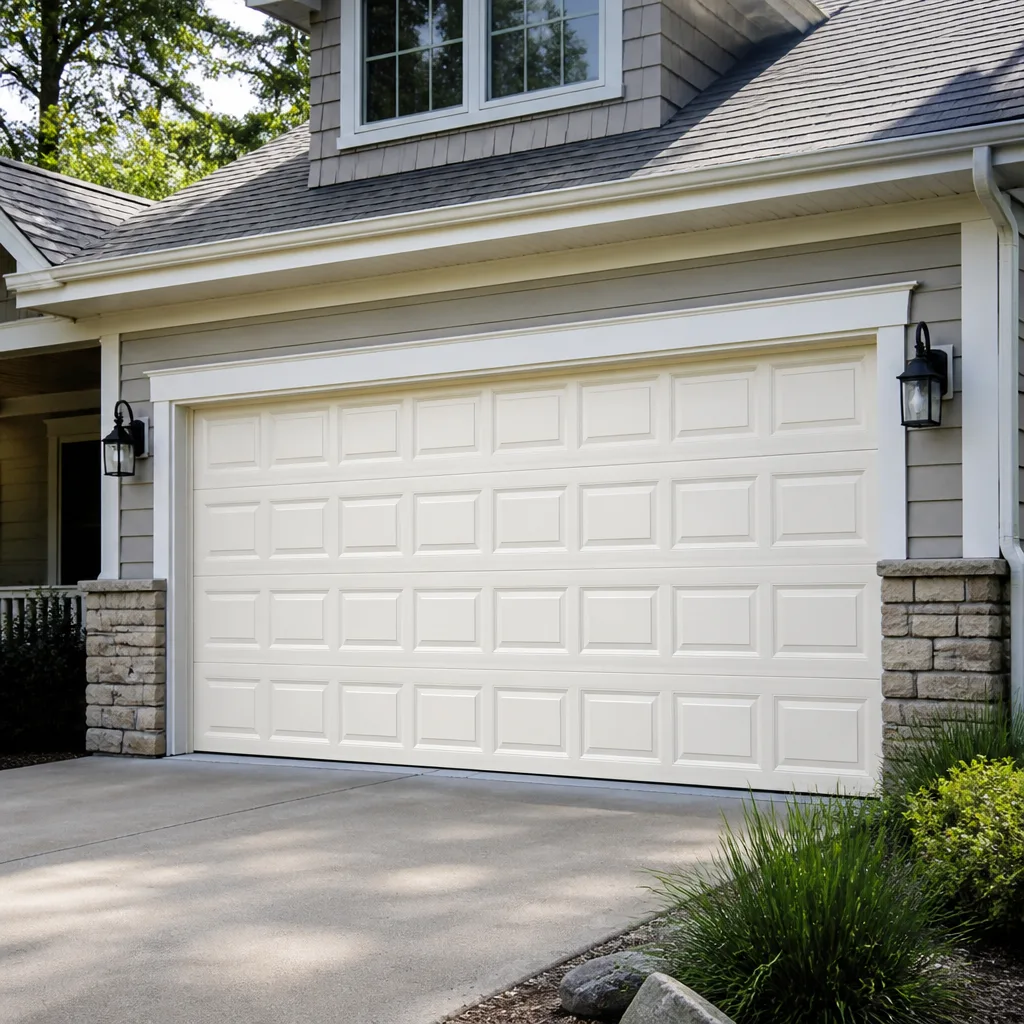 Raised-panel steel
 Carriage house
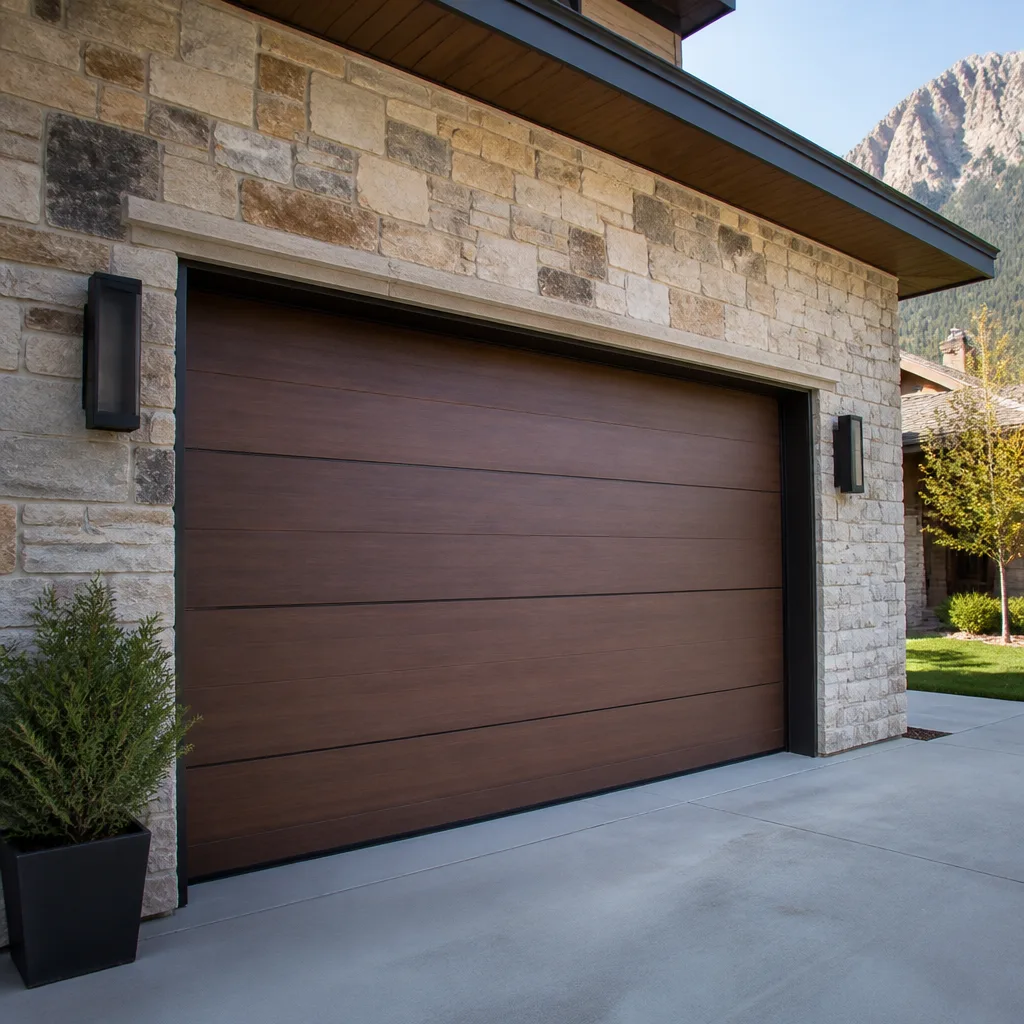 Modern flush
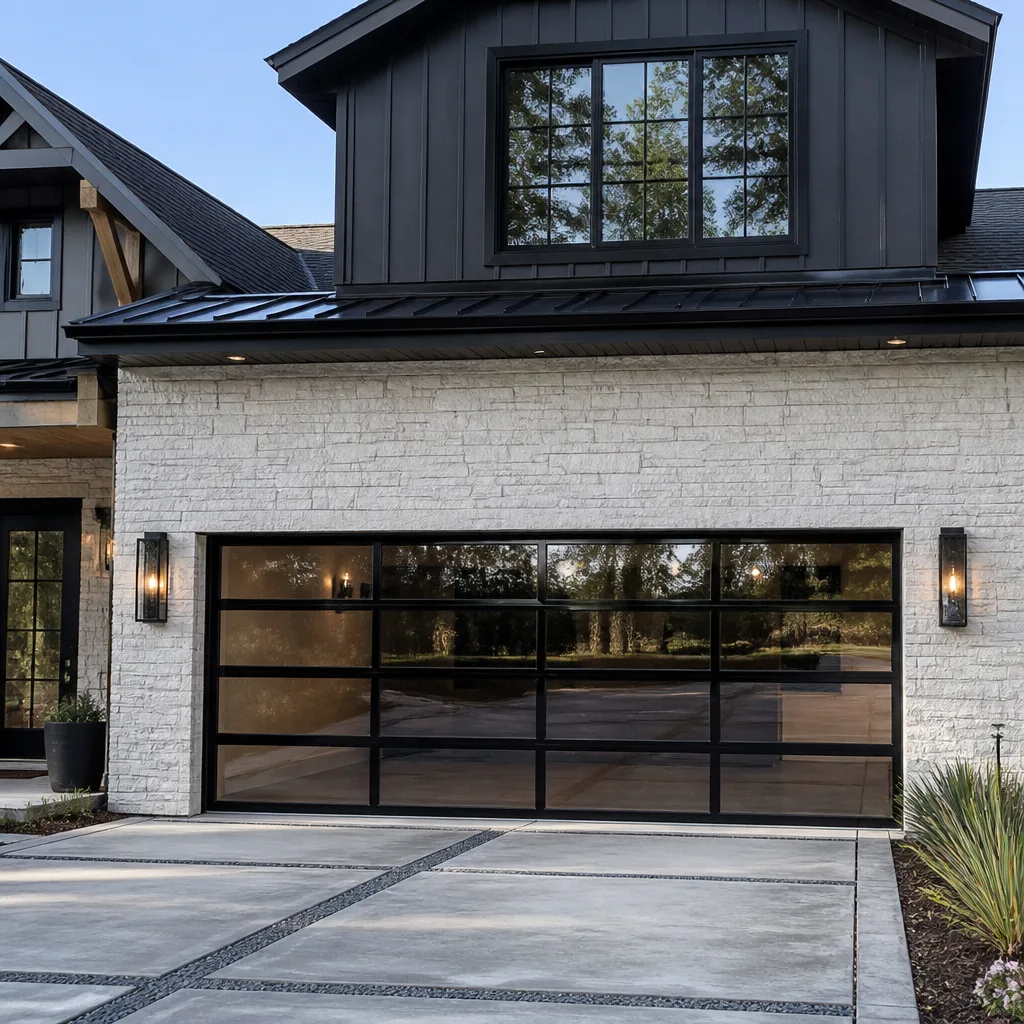 Full-view glass
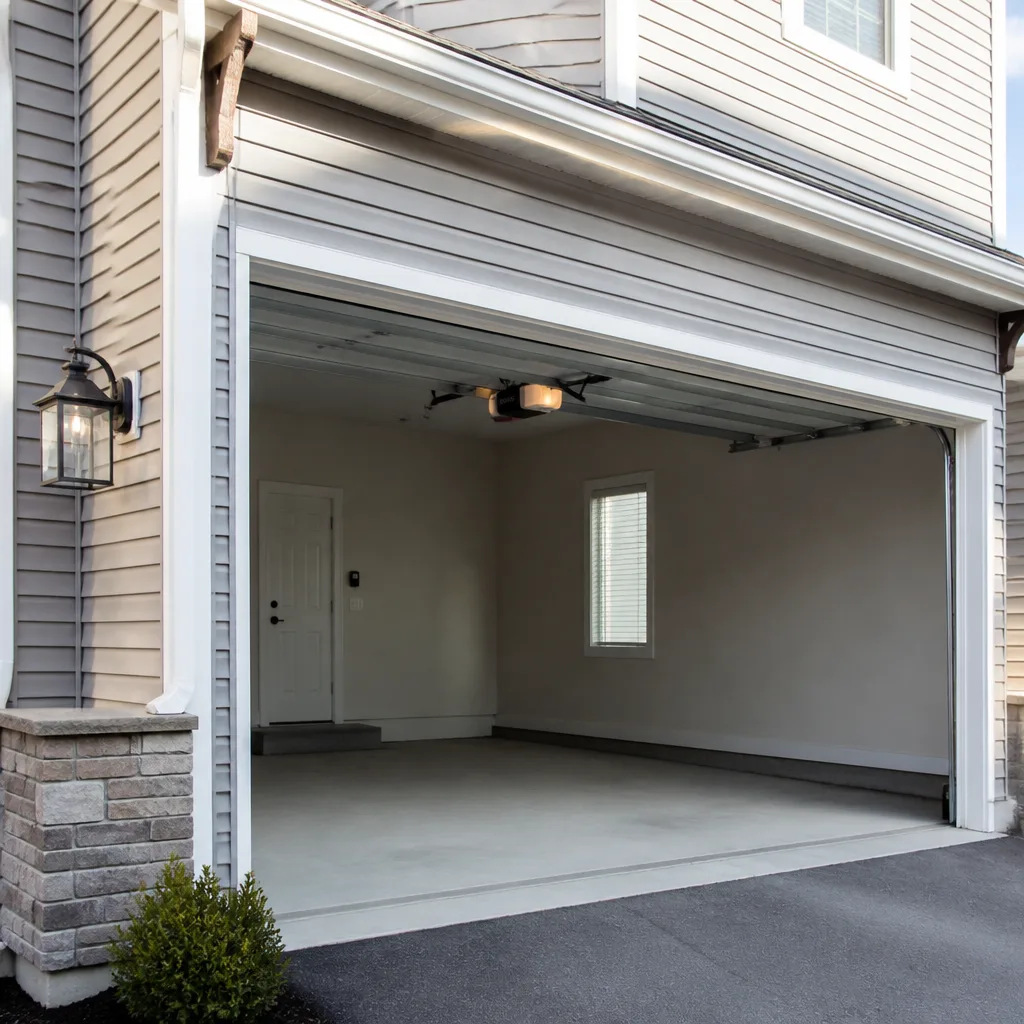 LiftMaster openers
 Chamberlain openers
Full 25-point door and opener safety check with every visit - springs, cables, rollers, tracks, and your LiftMaster or Chamberlain opener included
You get a price before we start. It does not change when the pro arrives.
Get your free estimateGarage Door Warning Signs: A Detroit Homeowner’s Reference Guide
Most garage door guides start with the obvious: a broken spring, a door that won’t close, a snapped cable. By the time those happen, you’re past warning signs and into a repair bill. The subtle indicators that actually predict a failure are quieter. A door that takes two seconds longer to open than it did last winter isn’t “just getting old.” It’s measurable friction, and in Detroit’s freeze-thaw winters that friction points to one of a few specific hardware problems. Catch them early and the fix is small. Ignore them until spring and the same problem has taken the opener, the springs, or both with it. This guide covers what to watch, what to monitor, and what to call about today in Detroit.
Quick Answer
The earliest garage door warning signs are a slower open cycle, a slight hesitation at the start, uneven panel gaps, and new noises at specific points in the travel. In Detroit, these show up most often after the first hard freeze, when metal contracts and lubricant stiffens. Anything involving a snapped spring, a frayed cable, or a door that drops are stop-using-it-now signs. Everything else is a schedule-it-soon sign. Call (888) 804-9214. We answer 24/7. Fast dispatch from 7am to 7pm, Sunday through Friday.
Styles & brands we work with
- Raised-panel steel
- Carriage house
- Modern flush
- Full-view glass
- LiftMaster openers
- Chamberlain openers
Table of Contents
- The Cold Morning Lag Test: Measuring Opener Strain in Detroit Winters
- Inspecting Torsion Springs in High-Cycle Detroit Garages
- Normal Panel Weathering vs. Thermal Stress Fractures
- Sound-Based Diagnostics: Scraping, Grinding, and Popping
- The Three-Tier Severity Framework
- Opener Strain Signs That Point to Motor Failure
- Seven Visual Checks You Can Do in Five Minutes
- When to Call a Professional
The Cold Morning Lag Test: Measuring Opener Strain in Detroit Winters
Here’s the test. Pick a mild day and time how long your door takes to travel from fully closed to fully open. Count it once, write it down. Now do the same on the first genuinely cold morning of the season, below freezing. If the door takes noticeably longer, or if it stalls for a beat at the very start, you have a measurable strain signal. That’s it. No tools.
A small difference is normal. Cold thickens the lubricant in the rollers and hinges, and steel contracts slightly. The door is genuinely heavier to move. What you’re watching for is a difference of more than a fraction of a second, or a hesitation that wasn’t there in October. That’s the point where the opener motor is working harder than it was designed to, and the parts that fail first are predictable:
- The opener’s drive gear or belt – the motor spins but the door doesn’t move, or moves in fits.
- The torsion springs – already carrying more load, they get pushed past their margin.
- The rollers and hinges – stiff from cold, they bind and drag on the track.
Three specific hardware problems hide behind the lag. First, a torsion spring that’s lost some of its tension – the door feels heavy and the opener strains. Second, dry or worn rollers and hinges – the track itself is fine, but the door is dragging. Third, an opener that’s been slowly dying all summer and is only now showing it under load. All three are cheap to correct early. All three are expensive by the time the spring snaps or the opener burns out its gear.
Detroit garages get hit harder than most. The freeze-thaw cycle runs hard from November through March, and the door swings between a heated interior and a frigid exterior multiple times a day. Run the lag test in early November, then again after the first cold snap. If the numbers haven’t moved much, you’re in good shape. If they have, call (888) 804-9214. We answer 24/7. Fast dispatch from 7am to 7pm, Sunday through Friday.
Inspecting Torsion Springs in High-Cycle Detroit Garages
Springs are the part everyone points to, and for good reason. But the signs of spring failure are subtler than a visible break. Before a spring snaps, it stretches. It loses coil tension. It develops small gaps between the coils. In a garage door used as a primary entrance – which is common in Detroit homes where the garage is the everyday door, not just the car door – the spring gets more cycles than the manufacturer’s rated count in a fraction of the time.
Here’s how to look at your springs without touching anything. Springs are the coiled steel above the door, mounted on a metal shaft. Look, don’t touch. Stand back and observe:
- Coil gap. Look at the spring from the side. The coils should be tight, with no visible gaps between them. A spring that’s stretched out shows light between coils.
- Color and surface. Surface rust on a spring is normal, but pitting or visible cracks along the coils are not.
- The winding cones. These are the metal ends where the spring meets the shaft. If the spring looks like it’s pulled away from one cone, that end is under load in the wrong direction.
- Door balance. Close the door. Disconnect the opener (pull the release handle). Lift the door by hand to about waist height and let go. It should stay there. If it drops, the springs are weak.
- Door weight. While the door is disconnected, lift it by hand. It should move easily. If it feels like you’re lifting the whole door’s weight, the springs aren’t doing their job.
A safety caveat, and we mean this. Torsion springs are under extreme tension. Do not attempt to adjust, wind, or replace them yourself. Do not put a wrench on the winding cone. The stored energy in a torsion spring can cause serious injury in less than a second, and there is no safe shortcut. If your inspection shows any of the signs above, call a trained technician. We’ve handled enough spring jobs to know that the right move is always the safest one.
High-cycle Detroit garages benefit from an annual spring check because the usage rate drastically shortens the gap between “fine” and “failed.” The typical garage door in a Detroit neighborhood gets two or three times the daily cycles of a garage in a milder climate where the door is only used for the car. Ask your technician at any service call to check the springs while they’re there. It’s a small add to the visit and a large save later.
Normal Panel Weathering vs. Thermal Stress Fractures
Every steel or aluminum garage door in Detroit weathers. Panels fade, minor surface rust appears near the bottom, and paint chalks. That’s normal. What isn’t normal is a crack that runs across a panel in a straight line or a spider pattern, or a dent that appears without anything hitting the door. Detroit’s thermal cycles – warm days, cold nights, over and over through spring and fall – expand and contract the metal panels repeatedly, and the stress shows up at the panel seams and the hinge mounts.
Here’s how to tell the difference:
- Weathering is cosmetic. Fading, light surface rust, a chalky finish. No structural effect.
- Stress fractures are structural. Straight-line cracks across a panel, spider-web patterns radiating from a hinge or handle area, or a bow in the panel itself. These are the ones to photograph and schedule.
- Impact dents are from something hitting the door – a car, a bike, a storm. A single dent is a single cause. Cracks without impact are a thermal issue.
Panel stress fractures matter because they compromise the door’s rigidity. A cracked panel loses structural strength and starts flexing under load, which transfers stress to the hinges, the track, and the springs. A single panel crack that gets ignored becomes a door that no longer runs true. If you have a Clopay or an Amarr door with a straight-line crack across a panel, that’s a photograph-and-schedule sign, not a stop-using-the-door sign. We can look at it, tell you whether repair or replacement makes more sense, and leave the decision to you.
Detroit’s freeze-thaw rhythm gets blamed for a lot of things, and panel stress is one of the genuine ones. If the crack appears near a hinge or the center reinforcement, that’s a load-bearing area, and it’s worth a call sooner rather than later. Call (888) 804-9214. We answer 24/7. Fast dispatch from 7am to 7pm, Sunday through Friday.
Sound-Based Diagnostics: Scraping, Grinding, and Popping
Your ears are a diagnostic tool. The noises a garage door makes usually point to a specific hardware category. In our experience, three sounds cover the most common early problems, and each one points to a different fix.
- Scraping – a metal-on-metal drag, usually at the top or bottom of the travel. Points to a roller or hinge that’s dry, worn, or out of the track. Cheap and easy to correct before it wears the track itself.
- Grinding – a mechanical rumble from the opener unit itself, not the door. Points to the drive gear, the chain or belt, or a failing motor bearing. Opener-specific, and worth a look before the unit fails outright.
- Popping – a sharp snap or pop at a specific point in the travel. Points to a spring that’s about to lose tension, or a cable that’s catching. This is the one to stop and call about.
There’s a fourth sound worth flagging: a rhythmic squeak that tracks the door’s movement. That’s almost always a dry hinge or roller, and a proper lubrication with the right product usually resolves it. Don’t use WD-40 on the tracks – it attracts dust and makes things worse. A technician will use a silicone-based or lithium-based lubricant on the hinges and rollers and leave the tracks clean and dry.
The location of the sound matters as much as the sound itself. Scraping at the bottom of the door usually points to a floor-level roller; at the top, to the top bracket or the hinge closest to the header. Grinding that only happens at the start of the cycle points to the opener’s startup load; grinding throughout points to the drive. If you can’t tell where the sound is coming from, don’t guess. A quick diagnosis from a technician takes minutes and rules out the dangerous possibilities. If you have a Wayne Dalton or a Craftsman system and you’re hearing pops, treat it as urgent and call before running the door again.
The Three-Tier Severity Framework
Not every sign is an emergency, and treating them all the same leads to either panic or neglect. Here’s the framework we use. Sort every sign you notice into one of three tiers.
Tier 1: Signs you can photograph and schedule
- Surface rust on panels or bottom brackets.
- A slow open or close that’s been consistent for weeks.
- A single cosmetic dent or a scuff.
- A quiet squeak that comes and goes.
- Panel weathering with no cracks.
Photograph these, note the date, schedule a service call when it’s convenient. Nothing catastrophic is imminent. But don’t file them away and forget. Tier 1 signs that stay put for months become Tier 2.
Tier 2: Signs you should call within a week
- The cold-morning lag test shows a meaningful difference.
- A new scraping or grinding noise.
- The door doesn’t stay open when disconnected at waist height.
- A visible gap between spring coils.
- A straight-line crack in a panel.
- A door that drifts back down a few inches after opening.
These signs say the system is working harder than it should. Calling within the week keeps a small repair from becoming a large one. It also keeps the door usable in the meantime, as long as you keep an eye on it.
Tier 3: Signs that mean stop using the door now
- A snapped torsion spring (usually two clean halves visible above the door).
- A frayed, kinked, or visibly broken cable.
- A door that drops on its own or won’t stay open.
- A popping sound from the spring area.
- A door that’s off its track or visibly crooked.
- An opener that runs but the door doesn’t move at all.
These signs mean the safety margin is gone. Stop using the door, disconnect the opener if you can reach the release handle safely, and call a professional. The stored energy in a loaded spring or a cable under tension can release unexpectedly, and the safest action is to leave the door alone. Call (888) 804-9214. We answer 24/7. Fast dispatch from 7am to 7pm, Sunday through Friday.
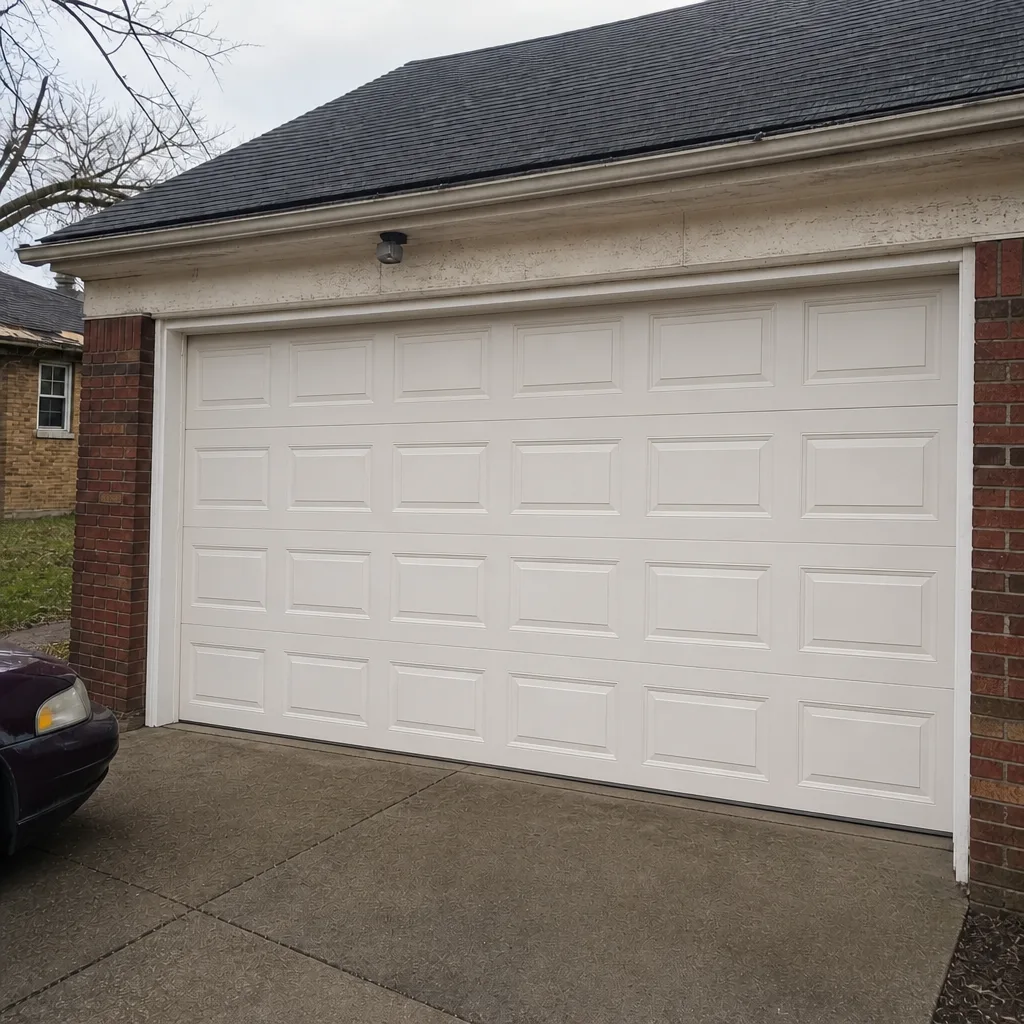
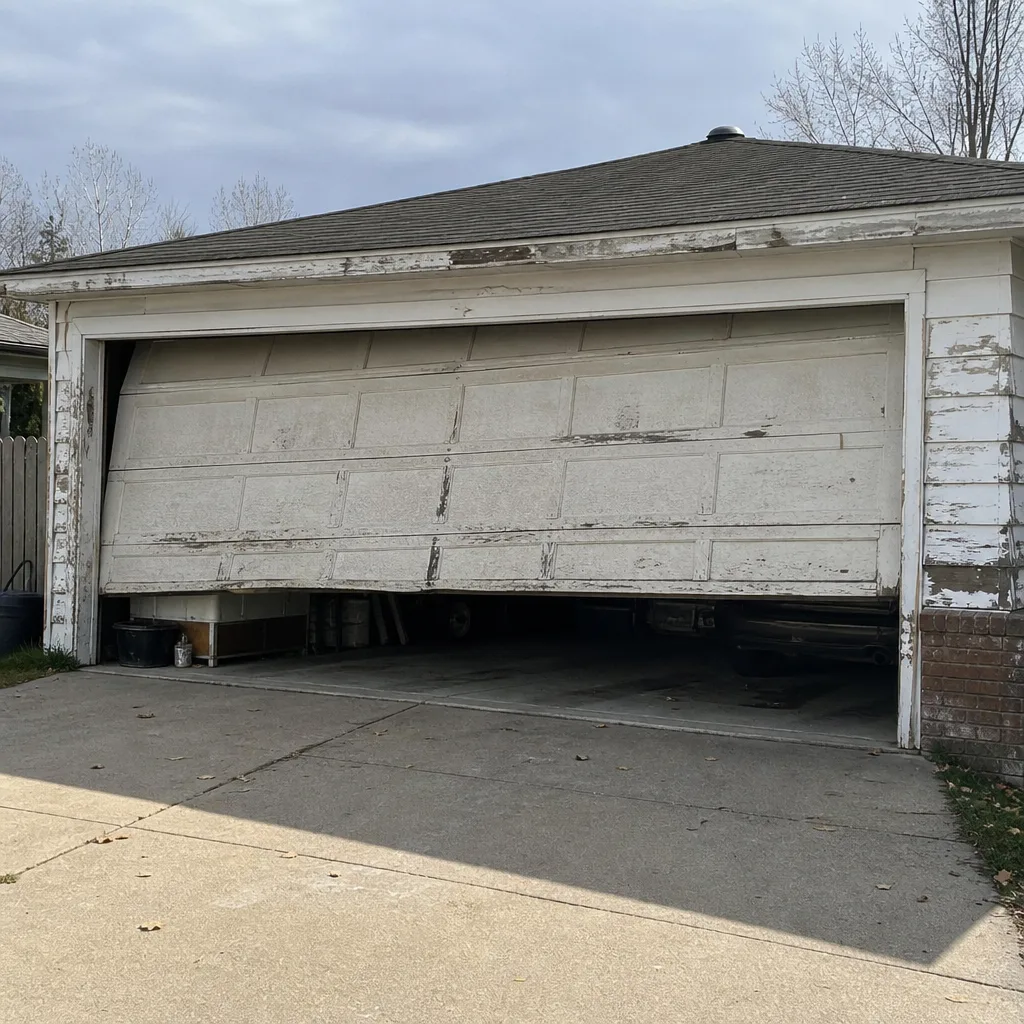
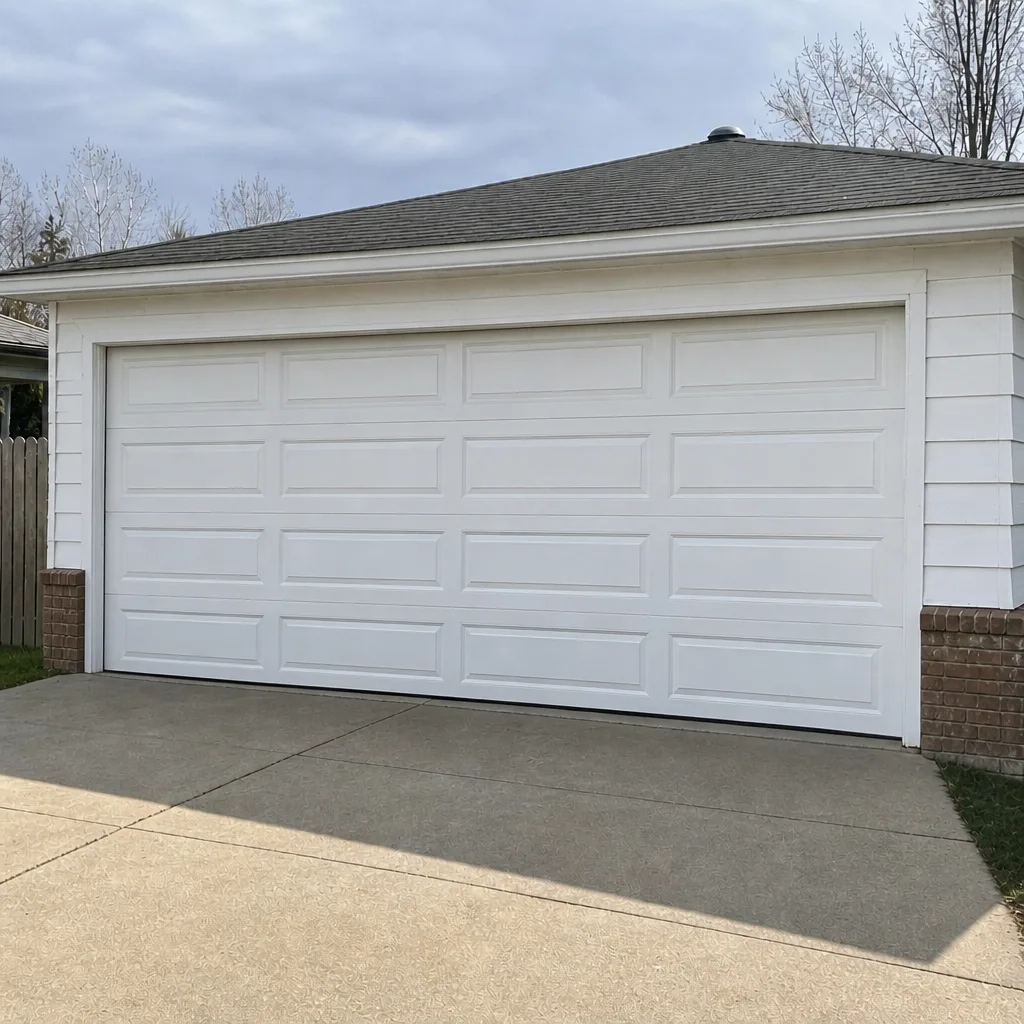
See the difference
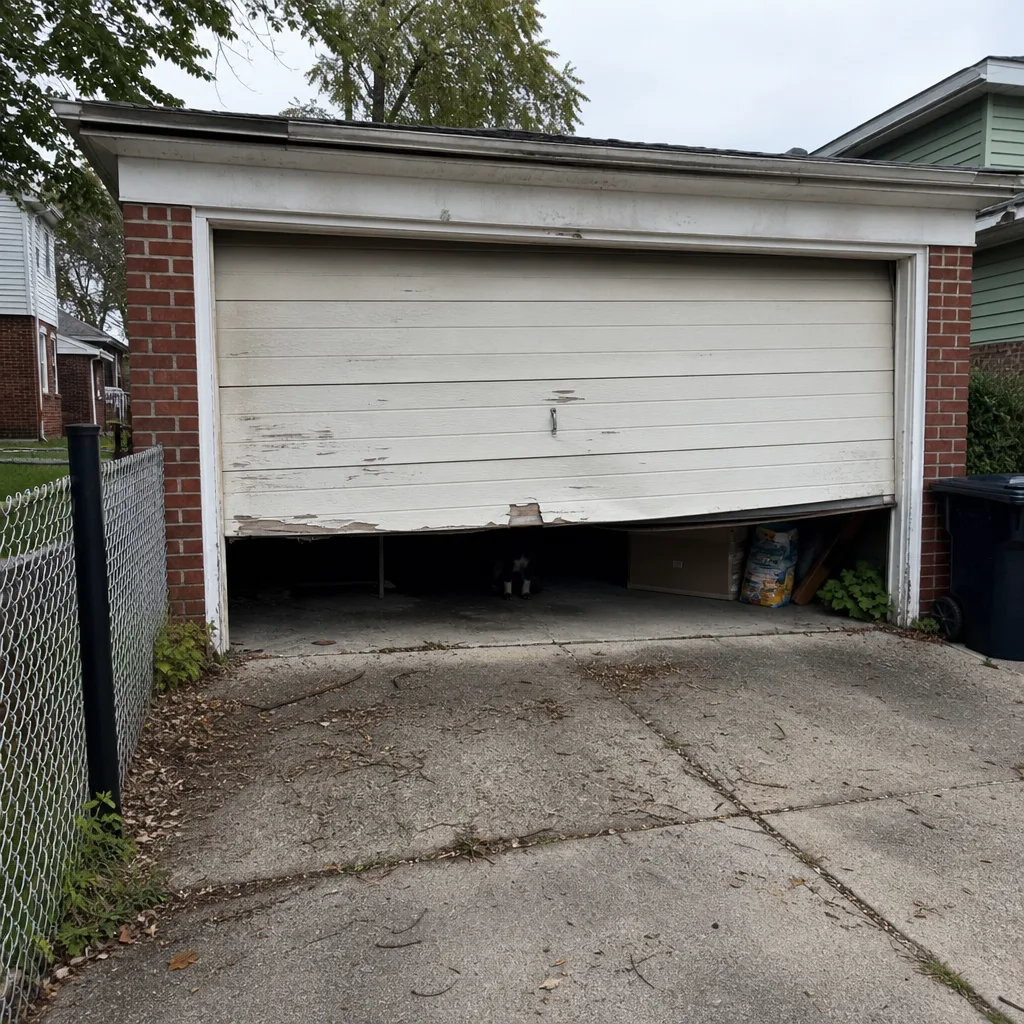 Before
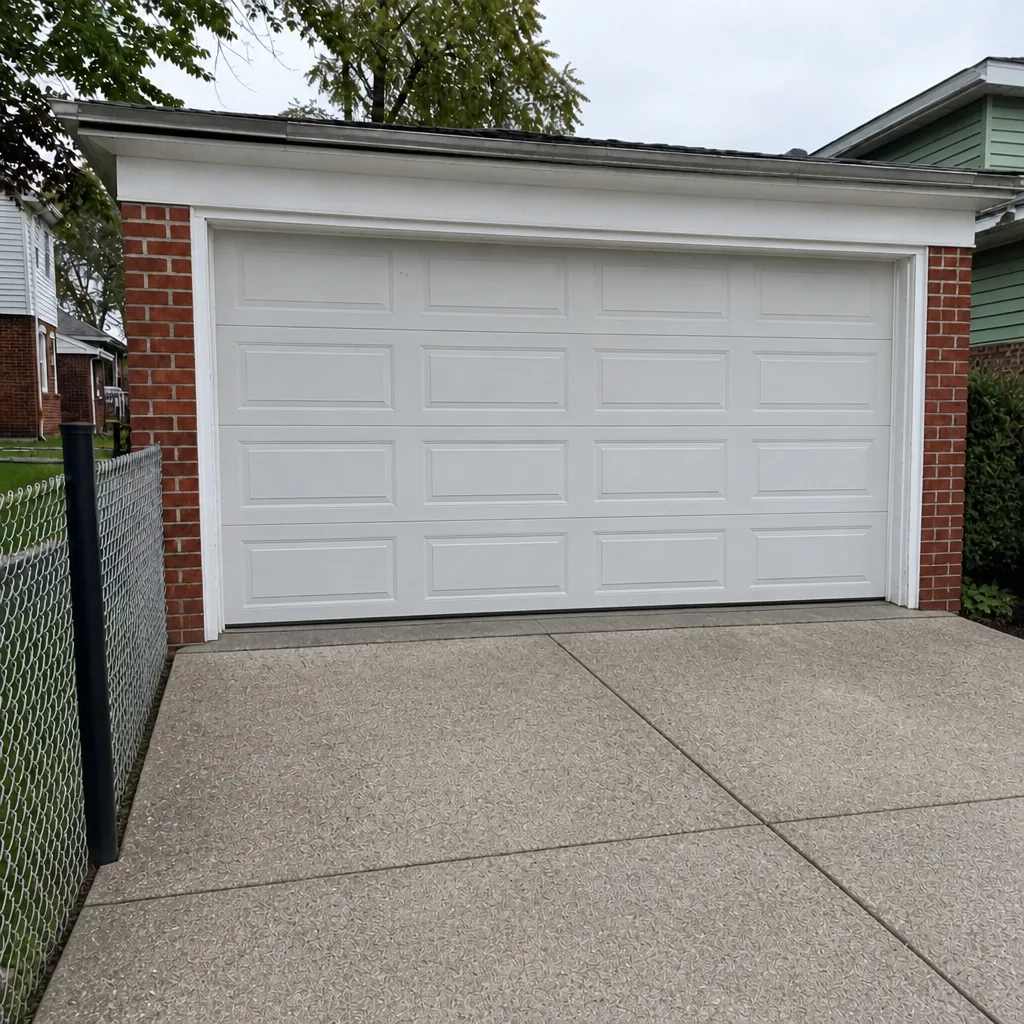 After
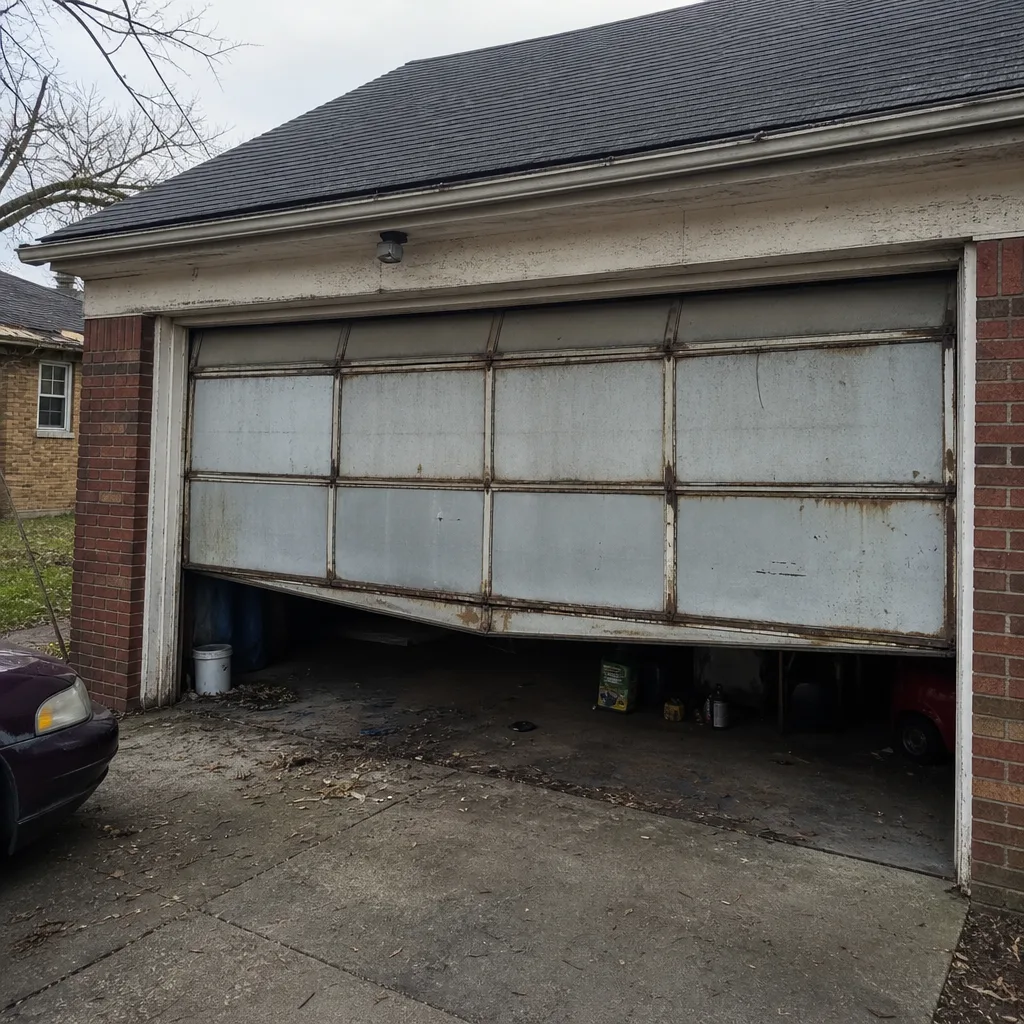 Before
 After
 Before
 After
Opener Strain Signs That Point to Motor Failure
The opener is the part homeowners notice last and replace first. That’s backwards. The opener is usually a victim, not a cause. When it strains, it’s telling you the door is heavier than it should be. Learning to read the opener is how you avoid replacing a motor that didn’t need to fail.
Signs the opener is under strain:
- The door moves slower than it used to.
- The opener runs but the door doesn’t move, or moves in jerks.
- The opener’s light flickers or dims during a cycle.
- The remote range has shrunk noticeably, or the wall button works but the remote doesn’t.
- The opener makes a grinding noise at the start of a cycle but runs smoothly after.
- The door reverses partway up for no apparent reason.
Older mechanical openers from Craftsman and Genie have simpler systems and fail in simpler ways. Modern LiftMaster and Chamberlain units have more electronics, more safety sensors, and smart-home integrations that fail for reasons that have nothing to do with the motor. A flickering light isn’t always a motor problem; sometimes it’s a loose connection at the wall console. A remote that stops working isn’t a motor problem at all. The right diagnostic is to test the door’s manual operation first, then the opener’s response, then the electronics. This is why we treat opener diagnostics as its own specialty, not a side note on a repair call. garage door opener repair is how we solve the problem at the source rather than guess at the motor.
Seven Visual Checks You Can Do in Five Minutes
A quick routine, once a month, catches most of the problems above before they escalate. No tools, no disassembly, no touching of spring or cable parts.
- Look at the springs. Stand back, check for coil gaps, cracks, or a spring that’s separated from its winding cone. Do not touch.
- Look at the cables. The cables run along the sides of the door. Check for fraying, kinks, or rust at the ends. Do not touch.
- Look at the tracks. Both vertical and horizontal. Look for bends, dents, or debris that could cause a roller to bind.
- Look at the panels. Check for cracks, bows, or dents that have appeared without impact. Photograph anything new.
- Look at the rollers and hinges. Rollers should be round and smooth; a flat spot on a roller means it’s due for replacement.
- Listen to a full cycle. Run the door once, start to finish, and listen. Note any new sound and where it happens.
- Do the balance test. Disconnect the opener, open the door by hand to waist height, let go. Note whether it stays, drops, or is hard to lift. Reconnect the opener when you’re done.
That’s it. Five minutes, once a month, and you’ll catch most early signs long before they become Tier 3. If you’re not sure about what you’re seeing, a diagnostic visit is a low-cost way to get a clear answer. garage door repair starts with a careful look, and a careful look is where the right fix begins.
Common Mistakes to Avoid
- Calling it “just getting old.” A garage door that’s been slowly failing for months is giving you a specific signal. Treating it as age rather than a symptom is how a cheap repair becomes a full replacement.
- Using the right lubricant in the wrong place. WD-40 on the tracks attracts dust and makes things worse. A silicone-based or lithium-based product on the hinges and rollers, not the tracks, is the right move.
- Ignoring the cold-morning lag test. In Detroit winters this test is the single cheapest early-warning tool you have. Running it in November and again in January catches most of the problems in this guide.
- Touching a torsion spring. The spring is under extreme tension. There is no safe home adjustment. Leave it alone and call a technician.
- Replacing an opener before diagnosing the door. If the opener is straining, the problem may be the door’s weight, not the motor. Replacing the motor without fixing the load just replaces the symptom.
- Ignoring a pop. A popping sound from the spring area is the single most urgent sign on this list. Stop using the door and call.
- Skipping the balance test because the door “feels fine.” The balance test takes ten seconds and tells you more about the springs than any visual check.
When to Call a Professional
Call a professional if you see a Tier 2 or Tier 3 sign, if you’re unsure what a sound or a crack means, or if the door is over eight years old and hasn’t had a diagnostic in a year or more. Call immediately if you see a snapped spring, a broken cable, a door that drops on its own, or a pop from the spring area. Do not touch or attempt to adjust a spring or cable yourself; the stored energy is genuinely dangerous, and the safe move is always a trained technician. Vantage Garage Door Repair offers free estimates in Detroit. Call (888) 804-9214. We answer 24/7. Fast dispatch from 7am to 7pm, Sunday through Friday.
When we come out, we work on what you already have. Whether it’s a LiftMaster opener, a Genie motor, or a Clopay door, our technicians have up to 14 years of experience diagnosing and repairing the system in front of them rather than pushing you toward a brand switch. If you’d rather speak with someone about Detroit service options, we’re happy to talk it through before you commit to anything.
Frequently Asked Questions
The first sign is almost always a small change in how the door sounds or how long it takes to open. Run the cold-morning lag test: time the door on a mild day, then again below freezing. A door that takes noticeably longer or hesitates at the start is telling you the hardware is under strain. That’s the signal to call before it becomes a repair. Call (888) 804-9214 for an exact quote. Estimates are free.
No. Torsion springs are under extreme tension, and adjusting or replacing them requires specialized tools and training. Attempting it yourself can cause serious injury. If you suspect a spring problem, call a trained technician. For a clear diagnosis in Detroit, call (888) 804-9214. We answer 24/7.
Every job is different, so the written estimate sets the price. Common repairs range from a simple roller and hinge replacement to a spring replacement to an opener diagnostic. The estimate is free, and the price is quoted and agreed before any work starts. Call (888) 804-9214 for an exact quote. Estimates are free.
Cold thickens the lubricant in the rollers and hinges, and steel contracts slightly, so the door is genuinely heavier to move. That’s normal up to a point. If the door hesitates at the start or takes meaningfully longer than it did in the fall, the strain is beyond what the opener was designed for. That’s the point to call. Call (888) 804-9214. We answer 24/7. Fast dispatch from 7am to 7pm, Sunday through Friday.
Treat it as one. A popping sound from the spring area usually points to a spring that’s about to fail or a cable that’s catching. Stop using the door and call a professional. Do not touch the spring or cable. Call (888) 804-9214. A call outside dispatch hours is booked into the next opening, Sunday through Friday, 7am to 7pm.
Scraping usually comes from a dry or worn roller or hinge dragging on the track. Grinding usually comes from the opener’s drive gear, belt, or motor bearing. Scraping is usually a door problem; grinding is usually an opener problem. Both are worth a diagnostic before they get worse. Call (888) 804-9214 for an exact quote. Estimates are free.
The Bottom Line
The smallest, quietest garage door signs matter more than the loud ones. A two-second lag, a faint scrape, a spring with visible gaps between the coils – these are the signals that let you fix a small problem before it becomes a large one. Run the cold-morning lag test twice a year. Do the seven-check walk-through once a month. Sort what you find into Tier 1, 2, and 3, and act on the tier rather than the feeling. Stop using the door for anything in Tier 3. And when in doubt, call. Vantage Garage Door Repair works on what you already have, whether that’s a Wayne Dalton, an Amarr, a Clopay, or a Craftsman, and our technicians have up to 14 years of experience. Call (888) 804-9214. We answer 24/7. Fast dispatch from 7am to 7pm, Sunday through Friday.
Written by the team at Vantage Garage Door Repair.