
Last updated November 15, 2026
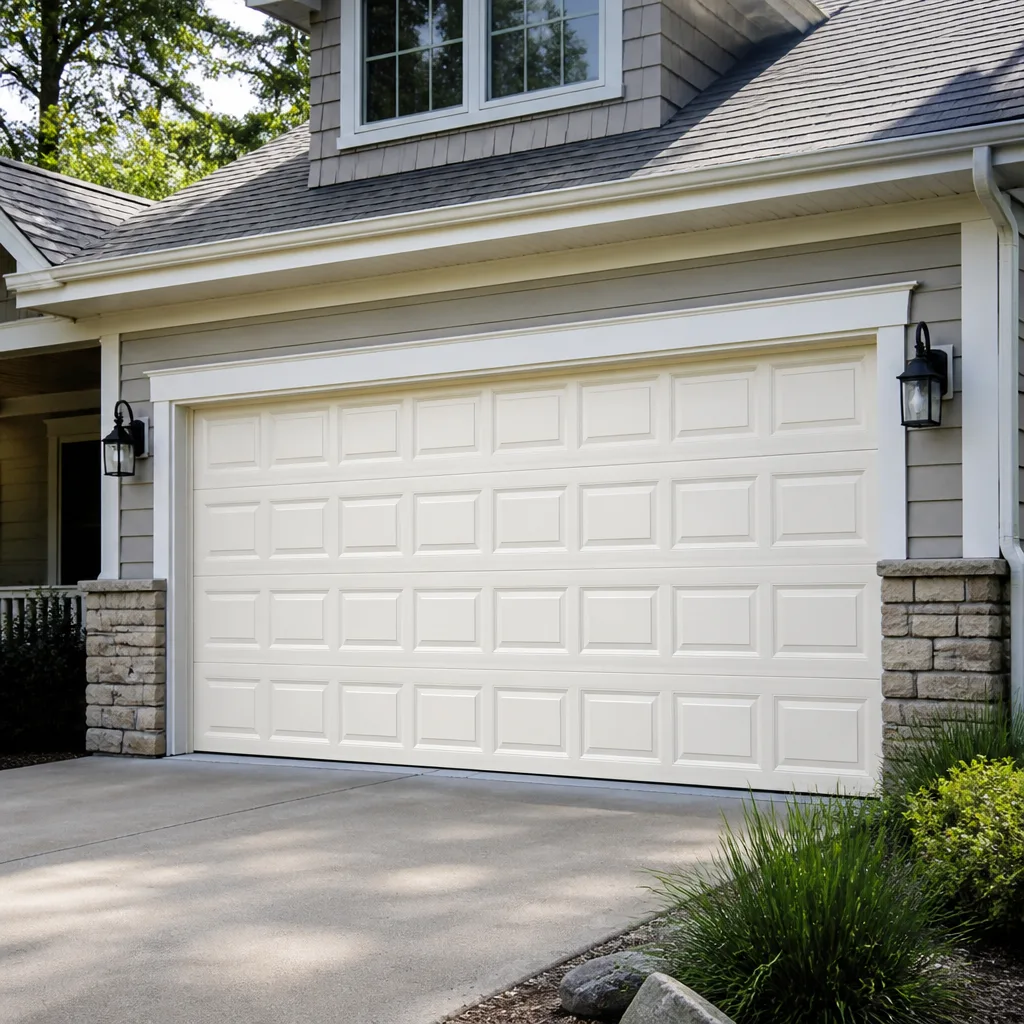 Raised-panel steel
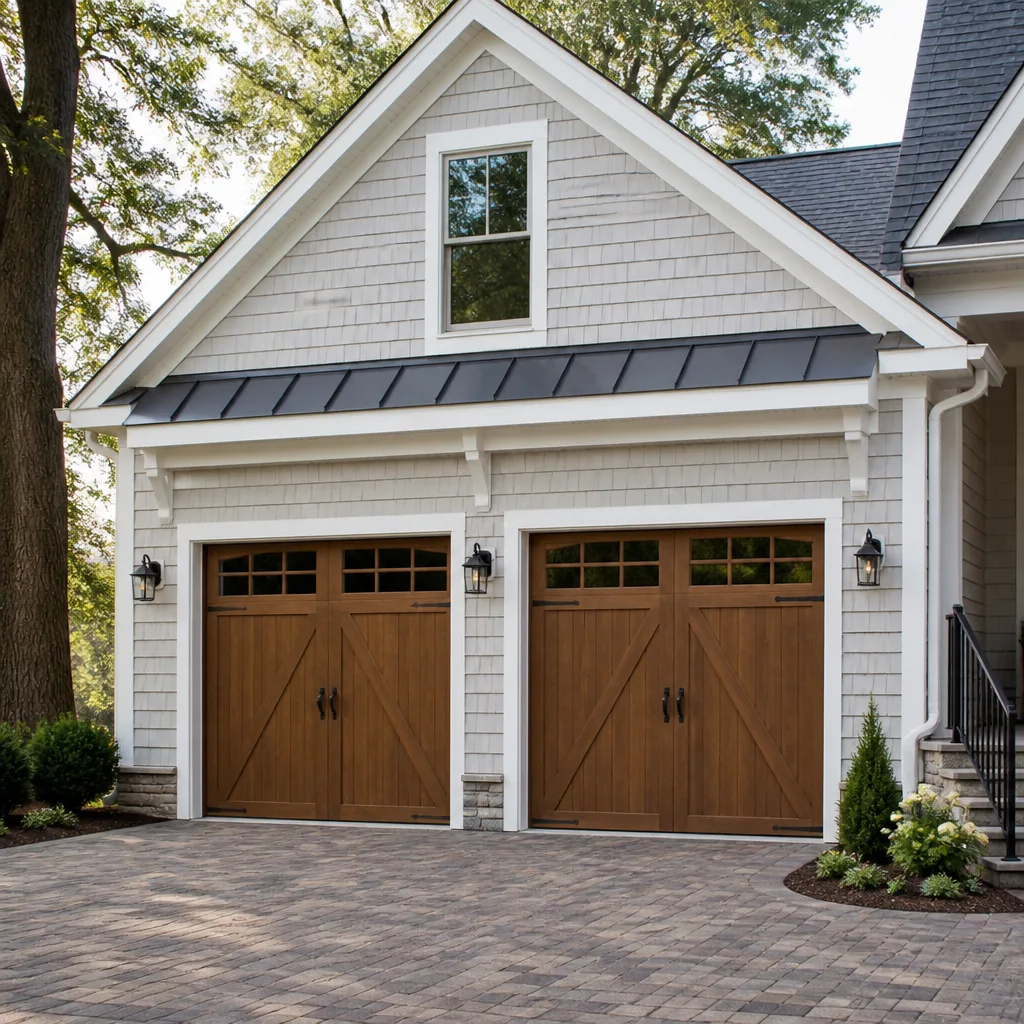 Carriage house
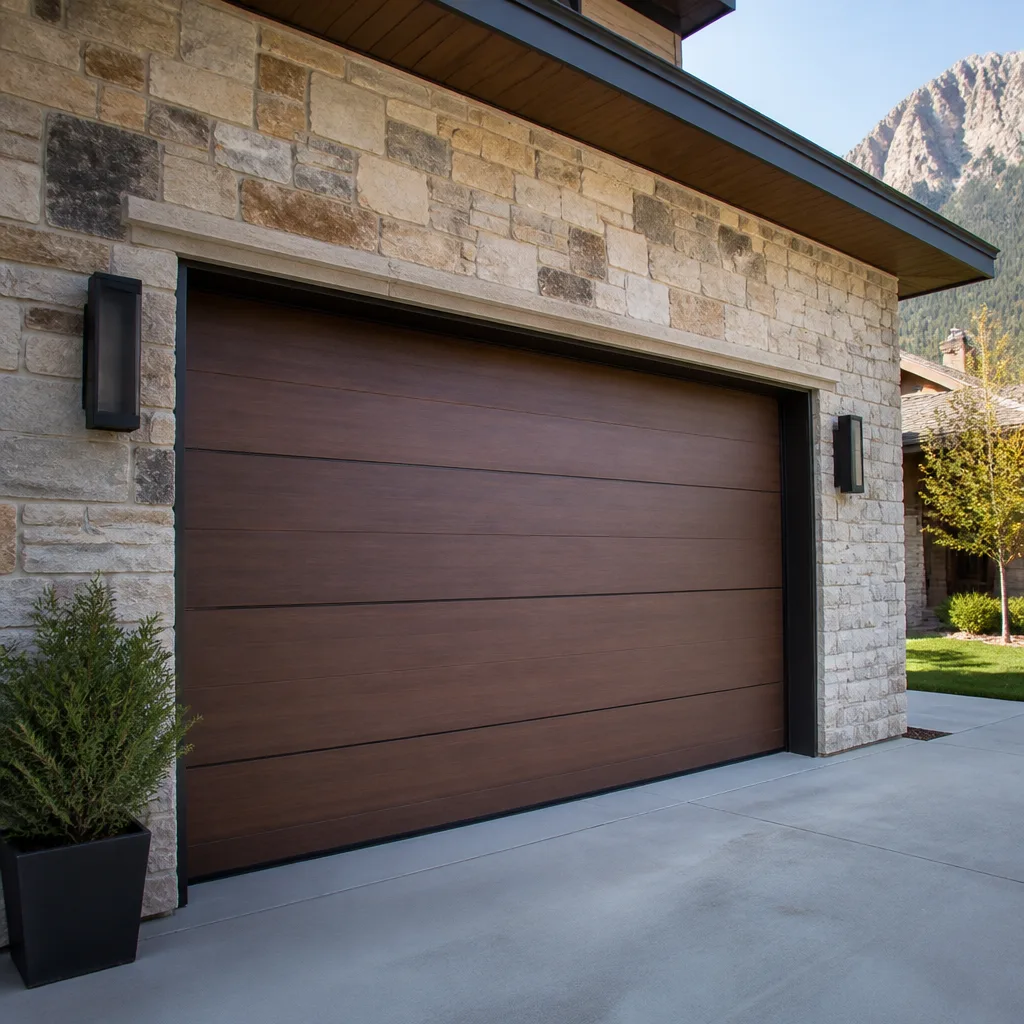 Modern flush
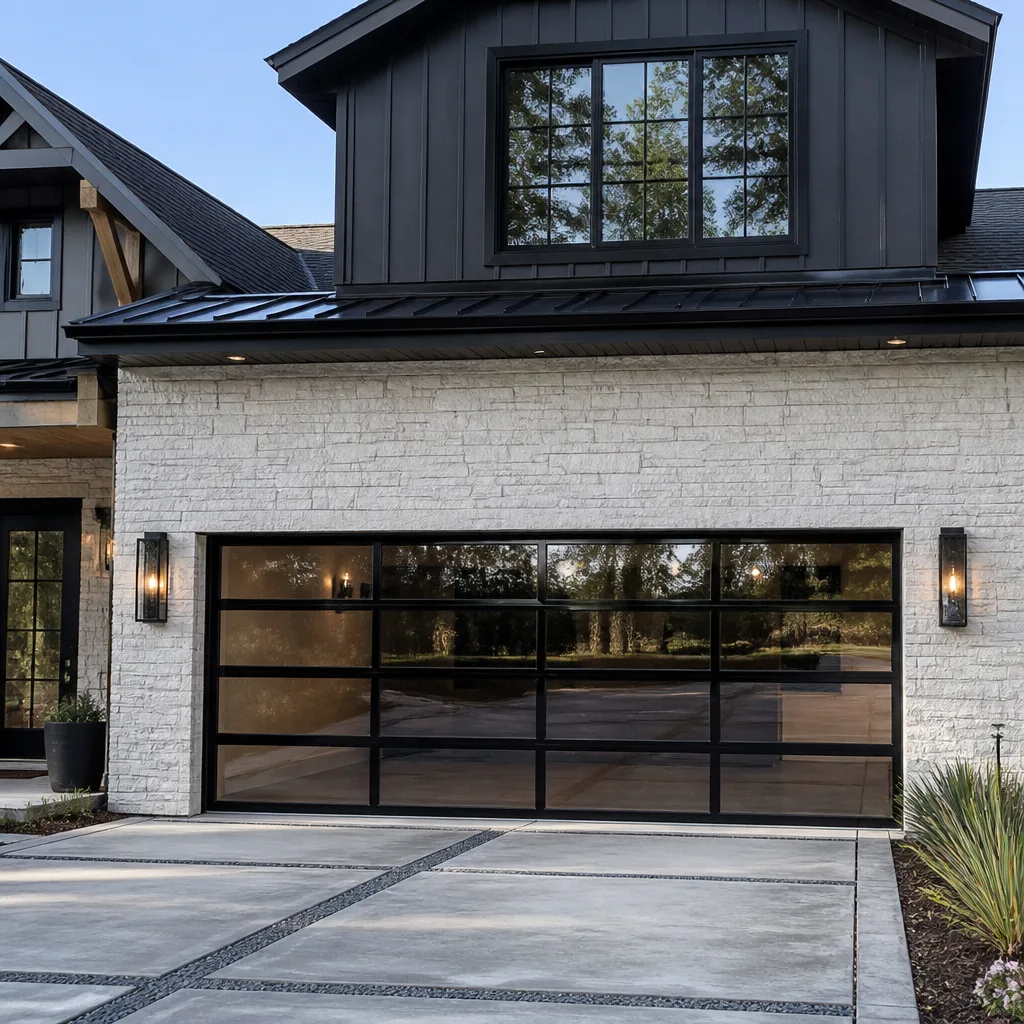 Full-view glass
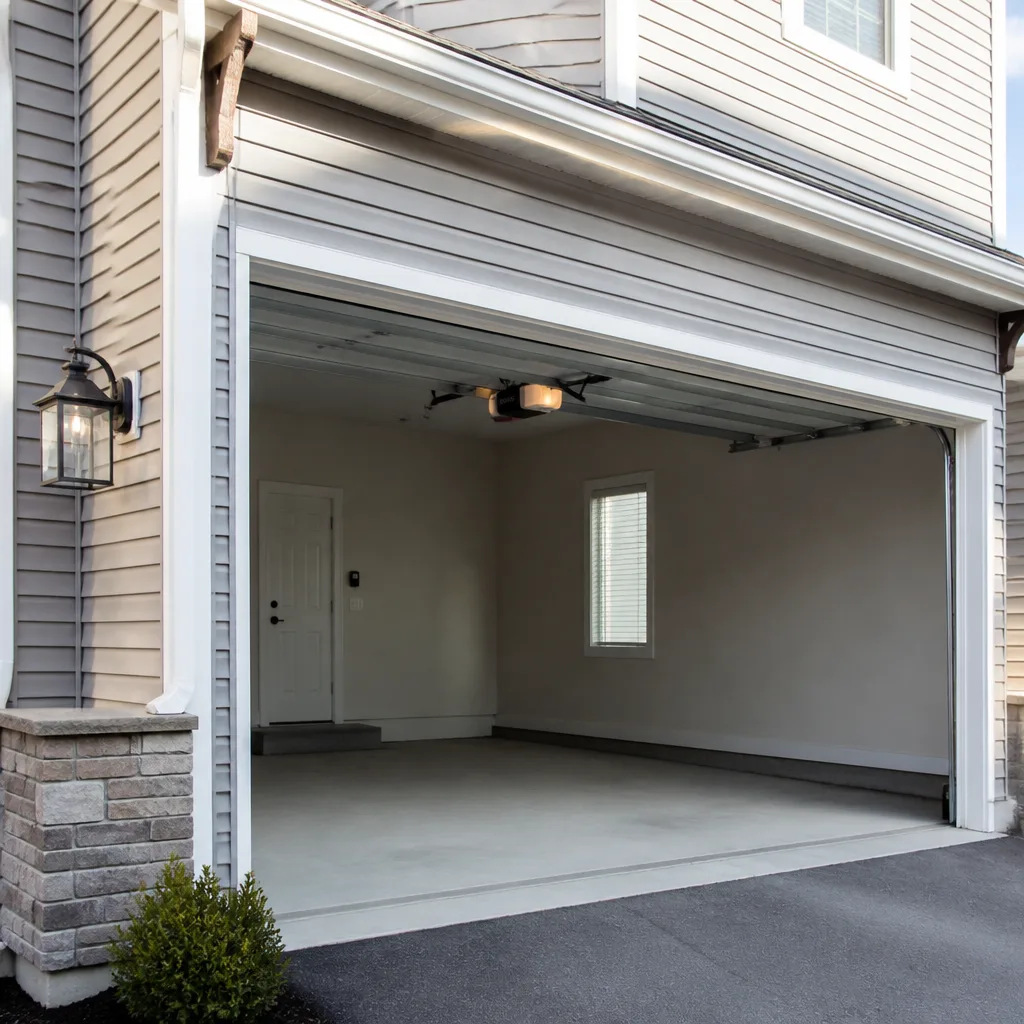 LiftMaster openers
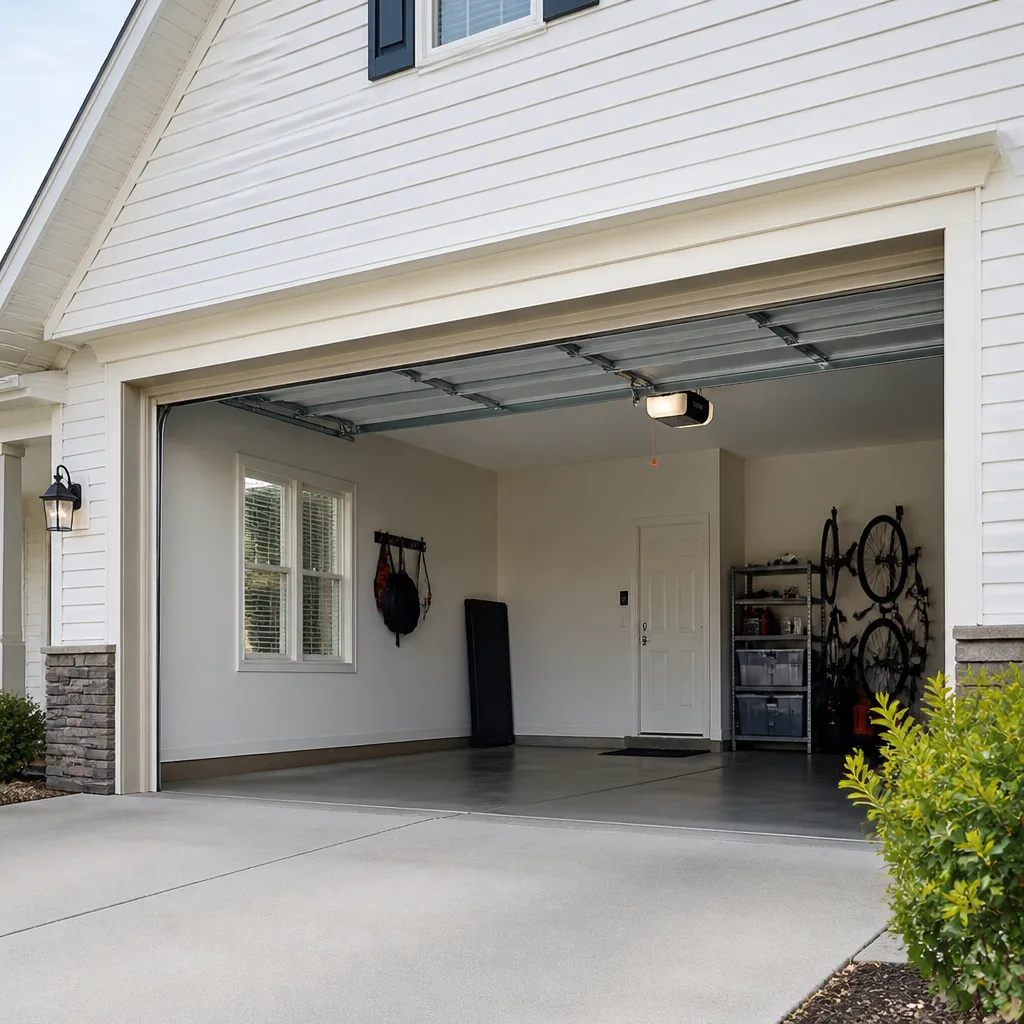 Chamberlain openers
Full 25-point door and opener safety check with every visit - springs, cables, rollers, tracks, and your LiftMaster or Chamberlain opener included
You get a price before we start. It does not change when the pro arrives.
Get your free estimateThe Complete Guide to Garage Doors in Detroit
Most garage door advice online was written for a climate that doesn’t exist here. Detroit homes sit through freeze-thaw cycles that crack concrete, expand wood, and loosen hardware in ways a guide written for Arizona or coastal California never has to think about. More importantly, a huge share of Detroit garages are detached structures built before 1960, running hardware and door geometry that modern replacement parts weren’t designed for. This guide treats Detroit as its own ecosystem: the climate, the housing stock, the Wayne County permit landscape, and the brand compatibility issues that come up when you’re upgrading an older garage with a modern opener. Read it once and you’ll know what you’re looking at, what it should cost, and when to call someone.
Quick Answer
Garage door problems in Detroit usually come down to three things: worn springs and cables that fail under freeze-thaw stress, opener electronics that struggle with an older or misaligned door, and doors that were never sized or insulated for a Michigan winter. Most repair calls are resolved with a single diagnostic visit, and the fix is almost always cheaper than replacement. If your door is loud, slow, or uneven, get an assessment before something fails completely.
Styles & brands we work with
- Raised-panel steel
- Carriage house
- Modern flush
- Full-view glass
- LiftMaster openers
- Chamberlain openers
Table of Contents
- How Detroit’s Freeze-Thaw Cycle Wears Out Doors
- Detached Garages vs. Attached: What Most Guides Get Wrong
- Door Styles That Fit Detroit’s Housing Eras
- Wayne County Permits: Repair vs. Replacement
- Upgrading Openers in Older Detroit Garages
- What Garage Door Work Costs in Detroit
- Multi-Brand Reality: What’s Actually Installed Here
- Repair or Replace? A Straight Decision Framework
How Detroit’s Freeze-Thaw Cycle Wears Out Doors
Detroit sits in a climate where the temperature crosses the freezing mark repeatedly through winter and early spring. That single fact explains more garage door failures here than anything else. Water gets into seams, joints, and hairline cracks, freezes overnight, expands, and then thaws. Do that a few dozen times a season and materials that look fine in July start to fail by March.
Here’s what that means for each material and component:
- Wood doors absorb moisture at the bottom rail and around panel joints. Paint hides the early stages, then the wood swells, the finish cracks, and rot sets in from the inside out.
- Steel doors handle the cold well but rust at any exposed edge, scratch, or bottom seal where meltwater collects. A small rust spot in fall becomes a bubbling paint blister by spring.
- Aluminum doors don’t rust, but the hinges and rollers attached to them are usually steel, and those are what corrode.
- Springs are the component most affected. Cold makes steel more brittle, and a spring that cycles hundreds of times a month is asked to do it in temperatures well below freezing. That’s why so many spring failures happen on the first genuinely cold morning of the year.
- Bottom seals and weatherstripping harden and crack. Once they do, water and cold air get in, which accelerates everything above.
The practical takeaway: in Detroit, maintenance means checking the bottom of the door and the spring hardware before winter, not after. A door that’s stiff and noisy in January is telling you something.
Detached Garages vs. Attached: What Most Guides Get Wrong
National garage door guides assume an attached garage: conditioned on one side, connected to the house, sharing a roofline. A large share of Detroit’s housing stock has a detached garage set back off an alley, and that changes the math considerably.
Detached garages in Detroit tend to be:
- Unheated and uninsulated, so the door and everything attached to it experiences the full temperature swing. An attached garage gets some warmth bleed from the house; a detached one doesn’t.
- Smaller and older, often a single-car footprint with a door sized to a standard that stopped being common decades ago. Off-the-shelf replacement panels may not fit.
- Structurally separate, which means the header above the door opening carries the load on its own. When that header sags or rots, the door track twists, and the door starts binding. This is one of the most common root causes we diagnose.
- More exposed to ground moisture, especially where the slab has settled or the alley drains toward the garage.
If your garage is detached, door weight matters more than you’d think. A heavier wood door on a detached garage with older framing puts more stress on the opener and springs than the same door on a squarer, newer attached structure. This is the kind of thing a driveway-side glance won’t tell you but a proper assessment will.
Door Styles That Fit Detroit’s Housing Eras
Detroit’s neighborhoods were built in distinct waves, and each wave came with a garage door style that looks right on that house. Putting a modern carriage-style door on a mid-century brick ranch, or a flat-panel contemporary door on a 1920s colonial, reads as wrong to anyone walking past. It also affects resale.
Craftsman and Arts-and-Crafts homes
Detroit has a strong concentration of Craftsman-era housing. These homes pair well with a paneled door that has visible stile-and-rail construction, often with a small row of windows near the top. A Clopay or Amarr door in a carriage-house profile fits this look without pretending to be something it isn’t.
Colonial and Tudor revivals
Common in Rosedale Park and similar neighborhoods, these homes call for a traditional raised-panel door in a color matched to the trim. Steer clear of anything with heavy ornamentation; the house already has enough going on.
Mid-century brick ranch
The dominant postwar form in much of Detroit. These want a clean, horizontal-panel door with minimal detail. A flat or low-profile panel in a neutral color is the right answer. Overly traditional carriage doors look out of place here.
Modern infill and new builds
Newer construction tends to favor full-view aluminum or frosted-glass doors. These need more attention to track alignment and opener calibration, but they hold up well if installed correctly.
If you’re replacing a door on an older Detroit home, take a photo of the house front and match the door to the era of the house, not to whatever’s trending in a catalog.
Wayne County Permits: Repair vs. Replacement
This is where a lot of homeowners get tripped up. Routine repairs (springs, cables, rollers, tracks, opener work) generally don’t require a permit. A full door replacement usually does, because it’s a structural change to the opening and involves the header, track anchoring, and sometimes the framing itself.
Here’s the practical approach:
- Call your city’s building department before you order a door. Permit rules vary by municipality within Wayne County, and what applies in one city may not apply in the next. Detroit’s own requirements for a garage door replacement are best confirmed directly with the city.
- Ask whether the permit is pulled by the contractor or the homeowner. Some jurisdictions require the licensed contractor to pull it; others let homeowners do it themselves. Get this in writing before work begins.
- Keep the permit and inspection paperwork with the house records. If you ever sell, a buyer’s inspector will notice an unpermitted garage door replacement, and it becomes a negotiation point.
- Don’t let a contractor tell you permits aren’t needed for a full replacement. A repair is one thing; a replacement is another. Ask them to show you the rule.
For a straight repair with no structural change, permits are rarely an issue. If a contractor offers to skip the permit on a replacement, that’s a signal to find someone else.
Upgrading Openers in Older Detroit Garages
Modern openers from Chamberlain, Genie, and LiftMaster are built around assumptions that don’t always hold in an older Detroit garage. The most common issues:
- Door weight mismatch. A new opener is calibrated to a specific door weight and balance. Put a modern unit on a heavy original wood door with worn springs and the opener will labor, overheat, or trip its safety reverse.
- Obstruction sensors and older framing. The photo-eye sensors need a clear, aligned line of sight near the floor. Older detached garages often have uneven floors or a sill that blocks the beam.
- Wiring. A new smart opener may need a dedicated outlet or upgraded low-voltage wiring for the wall control. Old garages often have a single bulb fixture and nothing else.
- Door travel and headroom. Some older doors have less headroom than modern openers expect, which affects how the rail mounts and how the door travels.
- Smart-home integration. Wi-Fi and app-enabled openers are great, but they depend on reliable power and a signal that can reach the garage. Detached garages set back from the house often don’t have that.
The fix isn’t to pick a different brand. It’s to diagnose the existing setup before the new opener goes in: measure the door balance, check the spring tension, verify the wiring, confirm the headroom. When those are right, a modern unit drops in cleanly. When they aren’t, no opener will work well.
What Garage Door Work Costs in Detroit
Pricing varies by job, door type, and what’s actually failing, but here are typical ranges Detroit homeowners can expect before an in-person estimate. These are estimates only; the written estimate sets the final price.
- Spring replacement (one torsion spring): typically $180-$340. Matched pairs are usually replaced together, so a pair costs roughly twice that.
- Cable replacement: typically $150-$250 per side.
- Roller and hinge service: typically $100-$200 for a full set.
- Track realignment: typically $120-$250.
- Opener repair (board, motor, sensor): typically $150-$350 depending on the part.
- Full opener replacement (unit installed): typically $350-$650.
- New single-car door installed: typically $900-$2,200 depending on material and style.
- New double-car door installed: typically $1,600-$3,500.
What pushes cost up: an out-of-square opening that requires track and header work, a door style that has to be custom-sized, or a detached garage that requires additional structural support before the new door can go in. What keeps cost down: catching a problem early, repairing rather than replacing, and having a balanced door that isn’t fighting the opener.
Any reputable contractor will quote and agree on the price before work starts. Get that in writing. If a technician starts work without a signed estimate, that’s a red flag.
Multi-Brand Reality: What’s Actually Installed Here
Detroit homes have a mix of everything: Chamberlain and LiftMaster openers dominate the newer builds, Genie is common in mid-century homes, and Craftsman units are everywhere because they were sold at retail for decades. Doors follow a similar pattern, with Clopay, Amarr, and Wayne Dalton all well represented. Older garages sometimes have no opener at all, just a manual door and a handle.
The problem with calling a single-brand dealer is that they’ll steer you toward their product even when a repair would serve you better. The problem with calling a generalist handyman is that they’ll guess at the model and order the wrong part. What you want is someone who works on all the major brands and diagnoses from what you actually have. We work on LiftMaster, Chamberlain, Genie, Clopay, Amarr, Wayne Dalton, Craftsman, and Raynor systems regularly; the technician’s job is to fix what’s installed, not to sell you a brand switch. That’s the difference between a repair and an upsell.
Repair or Replace? A Straight Decision Framework
The honest answer: repair unless one of a few specific things is true. Here’s how we think through it:
- Is the door structurally sound? If panels, rails, and stiles are intact and the door isn’t sagging or rotting, repair is almost always the right call.
- Is the failure isolated? One broken spring, one bad opener, one bent track: these are repair jobs. If multiple systems are failing at once, replacement may be more economical.
- Is the door original to a pre-1960 garage? Older wood doors can be beautiful and worth restoring, but if the bottom rail is rotted through and panels are separating, the repair cost can exceed a new door.
- Is the door inefficient? An uninsulated single-panel door on an attached garage leaks heat and cold. If the door is otherwise fine, you can sometimes add insulation; if it’s failing anyway, an insulated replacement pays off over Michigan winters.
- Is the door unsafe? If the spring is broken, the cable is frayed, or the door can drop unexpectedly, stop using it. That’s not a repair-or-replace question; it’s a call-someone-today question.
If the door passes the first four checks, repair. If it fails more than two of them, replacement is usually the better investment.
Common Mistakes to Avoid
- Ignoring a noisy door in fall. Grinding, squealing, or rattling gets worse in cold weather, not better. Address it before the first hard freeze, not after something breaks.
- Replacing one spring when both are worn. Matched pairs are usually replaced together because the second spring is the same age and under the same stress. Doing one now means paying for the second in a few months.
- Assuming all doors are standard size. Detroit’s older detached garages often have non-standard openings. Order a door before measuring and you’ll be returning it.
- Hiring a single-brand dealer for a non-brand problem. If your Genie opener is failing but the door is a Clopay, a dealer for either brand may push a full replacement. Get a brand-neutral diagnostic first.
- Skipping the permit on a replacement. Wayne County municipalities vary, but a full garage door replacement is structural work. Call the city’s building department and confirm.
- Letting a handyman work the springs. Torsion springs are under extreme tension and can injure or kill someone who isn’t trained and equipped. This is not a DIY job.
- Picking a door style that doesn’t fit the house. A carriage-house door on a mid-century brick ranch looks out of place and hurts resale. Match the era of the house.
See the difference
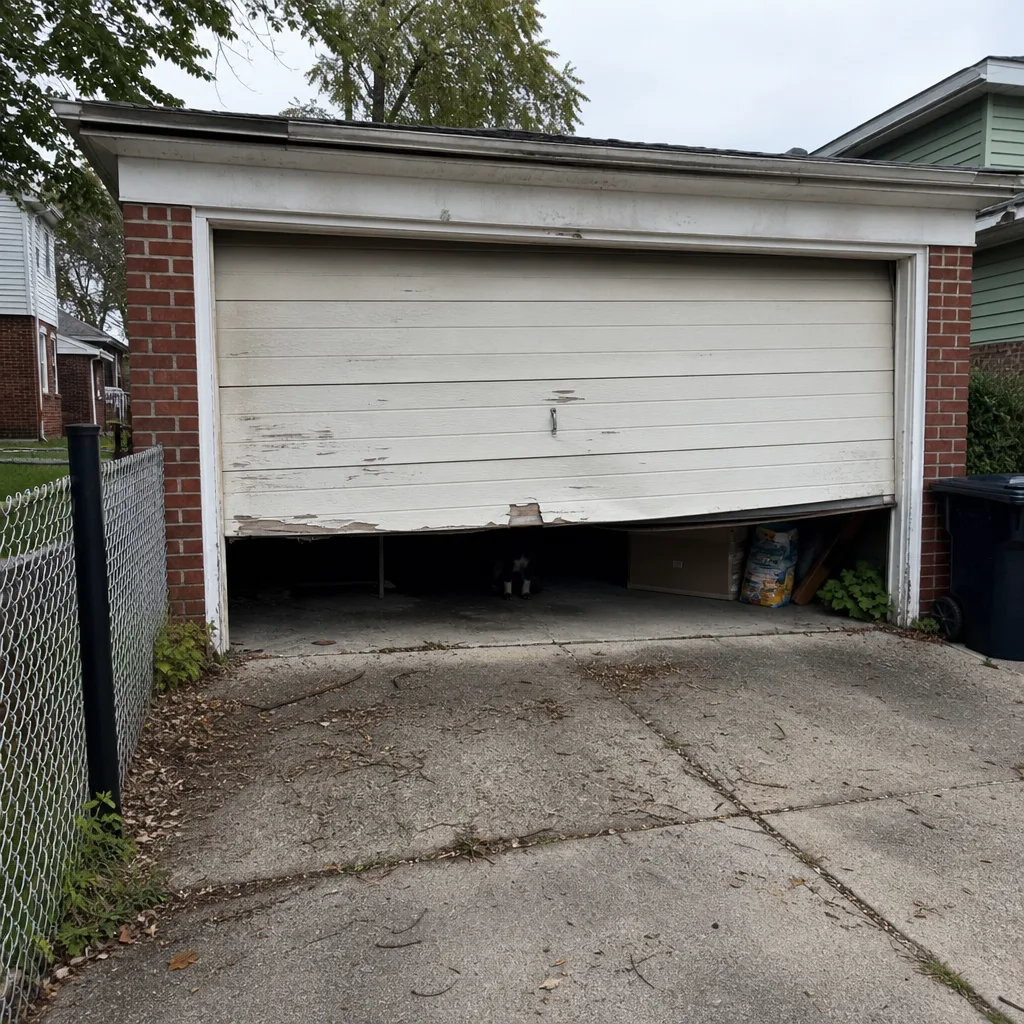 Before
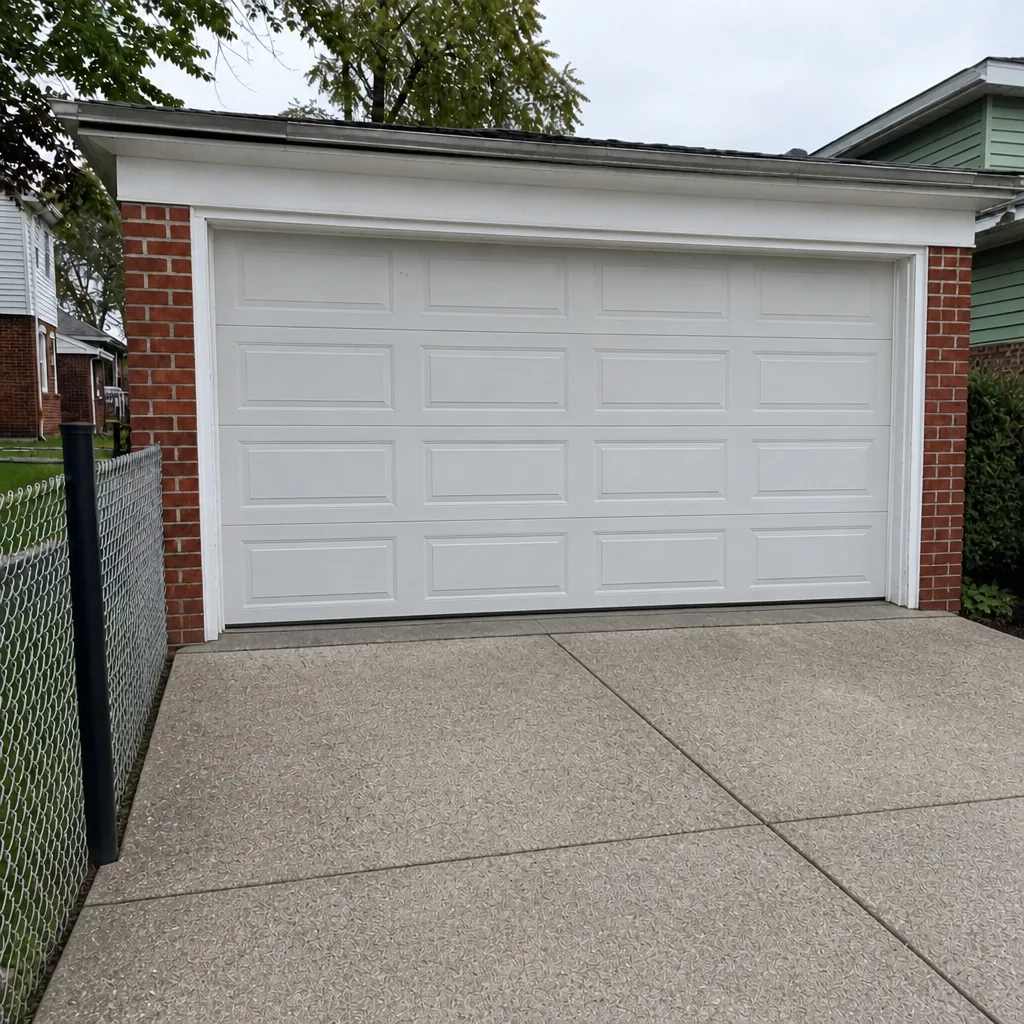 After
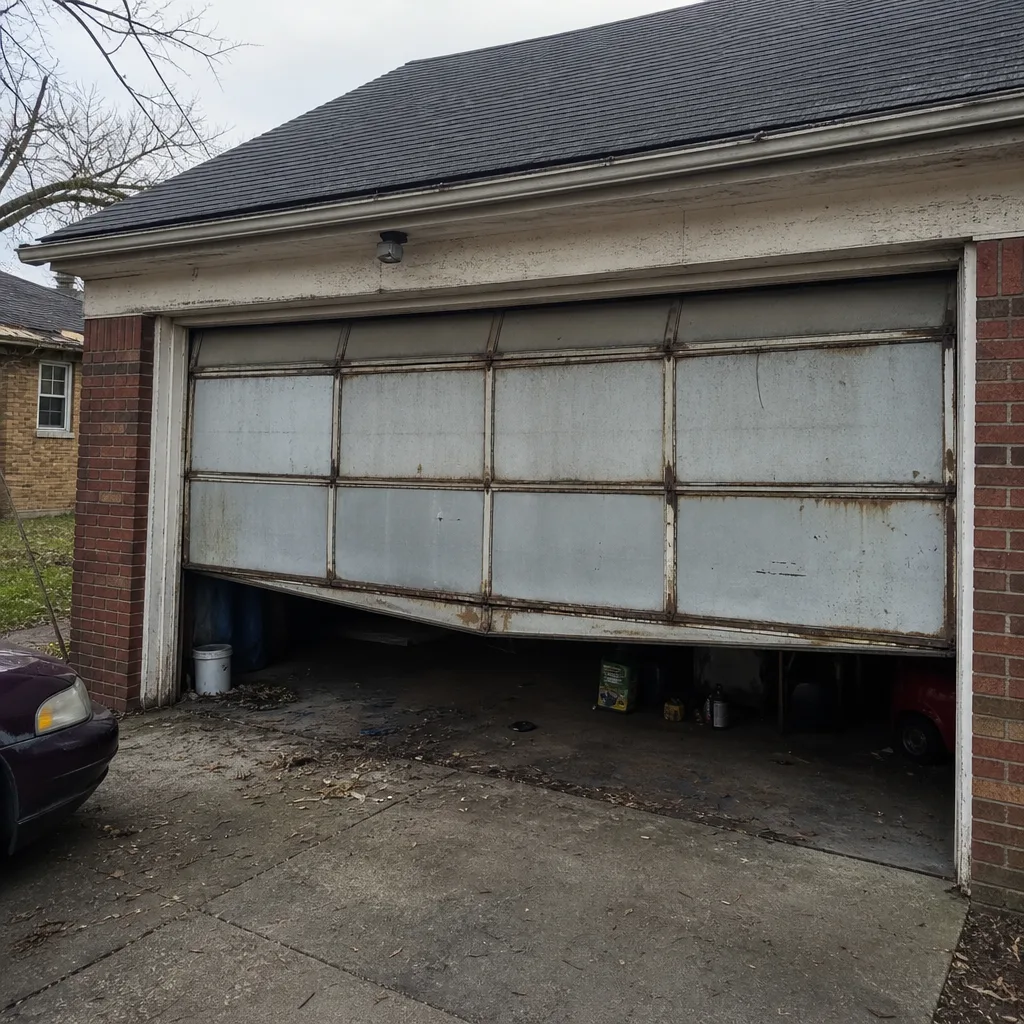 Before
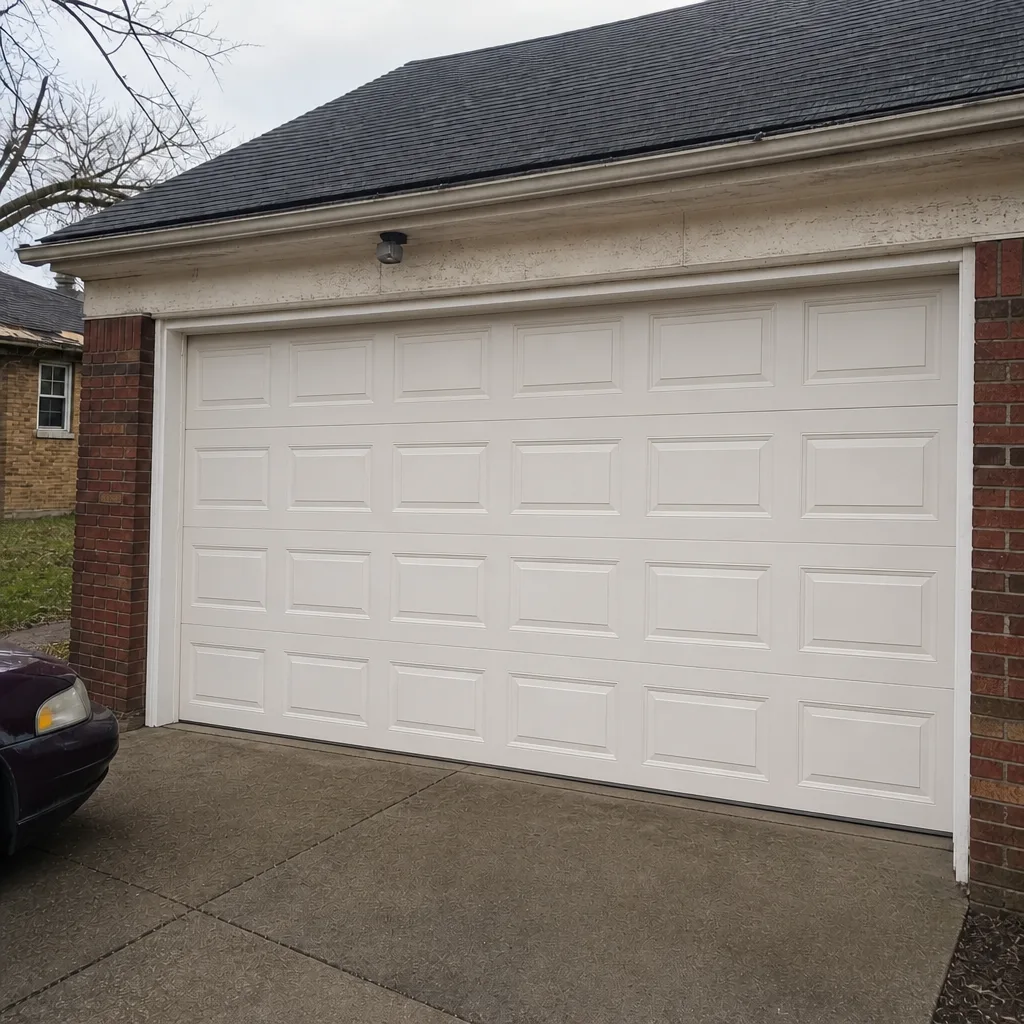 After
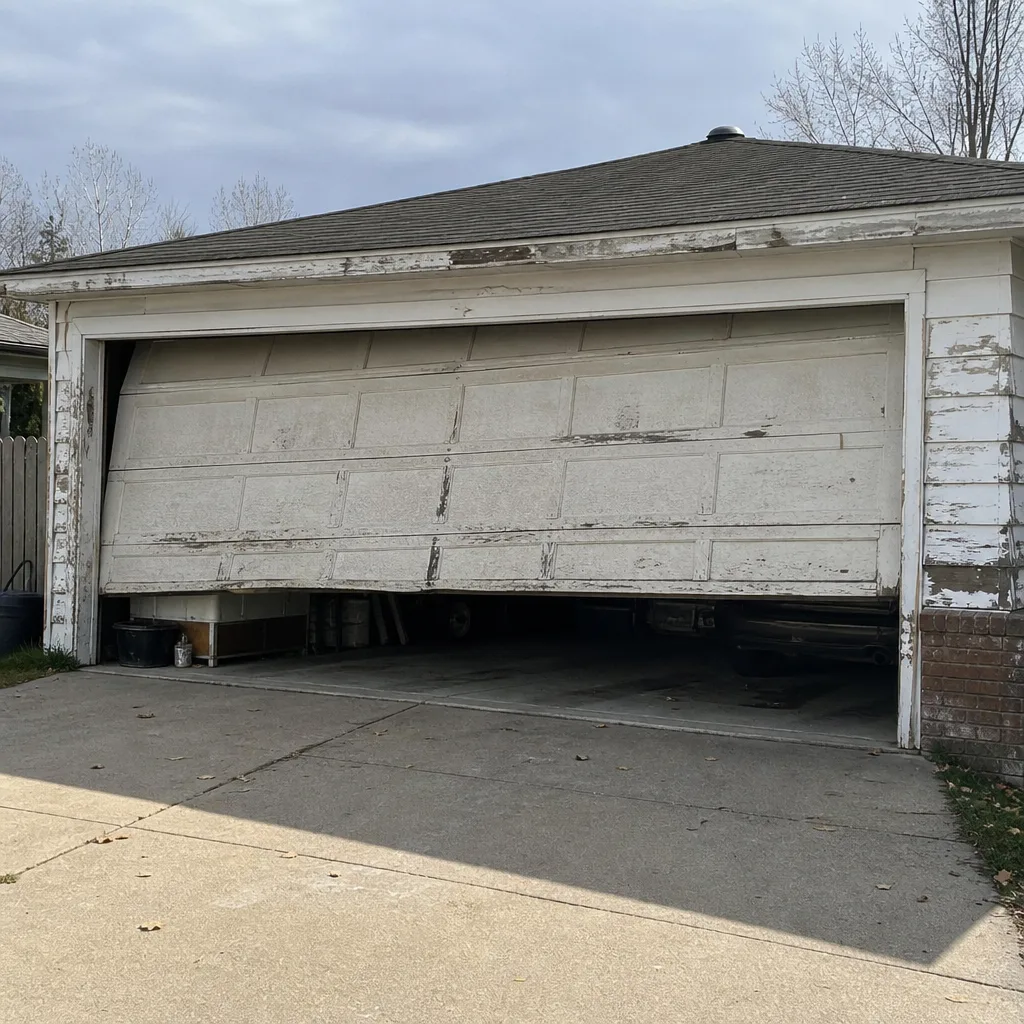 Before
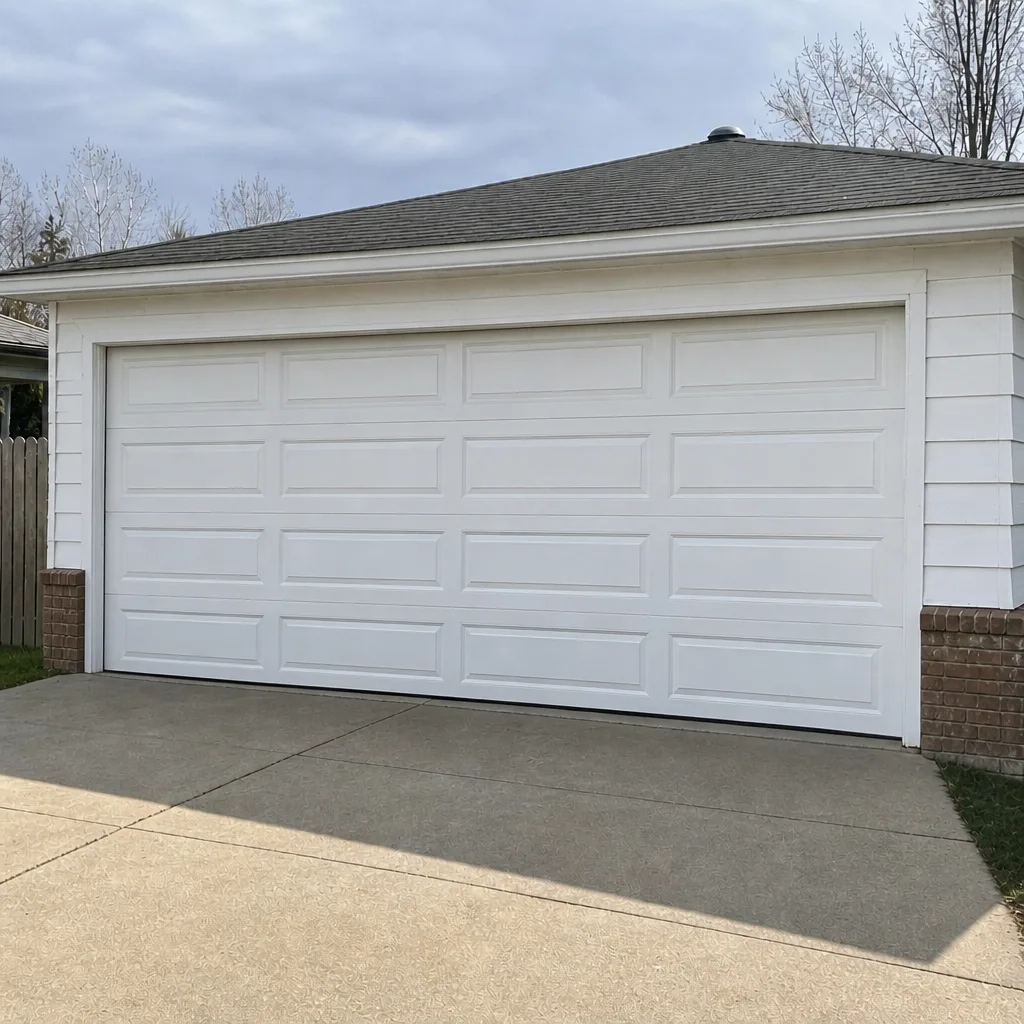 After
When to Call a Professional
Call for any of the following: a broken or sagging spring, a frayed or snapped cable, a door that won’t open or close evenly, an opener that reverses for no reason, a door that’s come off its track, or any sound of metal-on-metal that wasn’t there last month. Torsion springs and cables are genuinely dangerous; a broken spring can whip loose with enough force to cause serious injury, so don’t touch it yourself. If you’re not sure what’s wrong but something feels off, that’s reason enough for an assessment. Vantage Garage Door Repair offers free estimates in Detroit. Call (888) 804-9214. We answer 24/7. Fast dispatch from 7am to 7pm, Sunday through Friday.
Frequently Asked Questions
Typically $180-$340 for a single torsion spring, and roughly double that for a matched pair, which is usually what a proper repair calls for. The written estimate sets the final price, and any reputable contractor will quote and agree on the number before work starts. Call (888) 804-9214 for an exact quote; estimates are free.
Usually yes for a full replacement, since it’s a structural change to the opening; routine repairs generally don’t require one. The exact rule varies by municipality within Wayne County, so call your city’s building department to confirm before you order the door. This is the kind of thing to verify in writing, not take a contractor’s word for.
Many repair calls (springs, cables, op, track issues) can be handled the same day. Same-day availability depends on the time of day and what’s needed. Call (888) 804-9214 to check availability; we answer 24/7 and dispatch from 7am to 7pm, Sunday through Friday.
No. The price is quoted and agreed before any work starts, so there are no surprises. If the scope changes once the door is opened up, you’ll be told before any additional work happens, and the written estimate reflects the actual work performed.
Yes. Our technicians are licensed and insured. Spring and cable work involves high tension and is not a DIY job, so it’s worth confirming any contractor you call carries proper coverage. Ask for proof before work begins.
Usually yes, but the opening and header need to be checked first. If the framing is sound, a new door can be fitted; if the header is sagging, that has to be addressed before a door will track properly. An in-person assessment will tell you which scenario you’re in.
The Bottom Line
Detroit’s climate and housing stock put demands on garage doors that most national guides don’t account for. Freeze-thaw cycles stress springs and seals harder than in milder regions, detached garages sit out the coldest weather without any heat bleed, and older homes often have non-standard openings that need custom sizing. The right approach is straightforward: diagnose before replacing, work with a contractor who handles all the major brands rather than pushing one, confirm permit requirements for a replacement, and treat a broken spring or cable as an urgent safety issue. For garage door repair, garage door opener repair, or a full replacement, get a free estimate and a written price before anything starts.
Ready to get your door sorted? Call (888) 804-9214 for a free estimate from Vantage Garage Door Repair. We answer 24/7. Fast dispatch from 7am to 7pm, Sunday through Friday. If you’re in Detroit and your garage door is done cooperating, we’ll tell you what’s wrong and what it takes to fix it.
Written by the team at Vantage Garage Door Repair.